
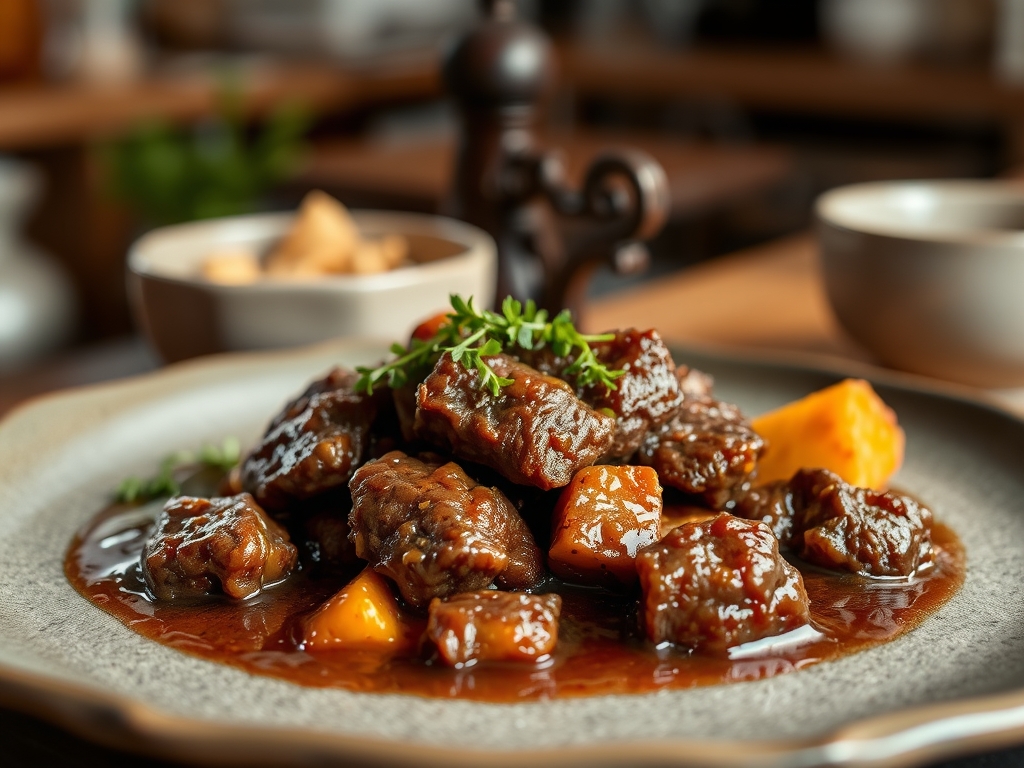
Picture the scene; it is a rainy Tuesday, your keys are missing, and the air is biting. You step through the front door and are immediately hit by a wall of savory, velvet perfume. This is the magic of slow cooker braised beef recipes. It is the culinary equivalent of a cashmere blanket; rich, deep, and impossibly tender.
Braising is more than just "low and slow" heat. It is a chemical transformation where tough connective tissues, specifically collagen, melt into silky gelatin. When you master slow cooker braised beef recipes, you are not just making dinner; you are conducting a symphony of amino acids and thermal energy. We are going to take that humble chuck roast and turn it into a masterpiece that looks like it belongs in a French bistro. Grab your favorite apron and a glass of wine; we are about to turn your kitchen into a laboratory of flavor.
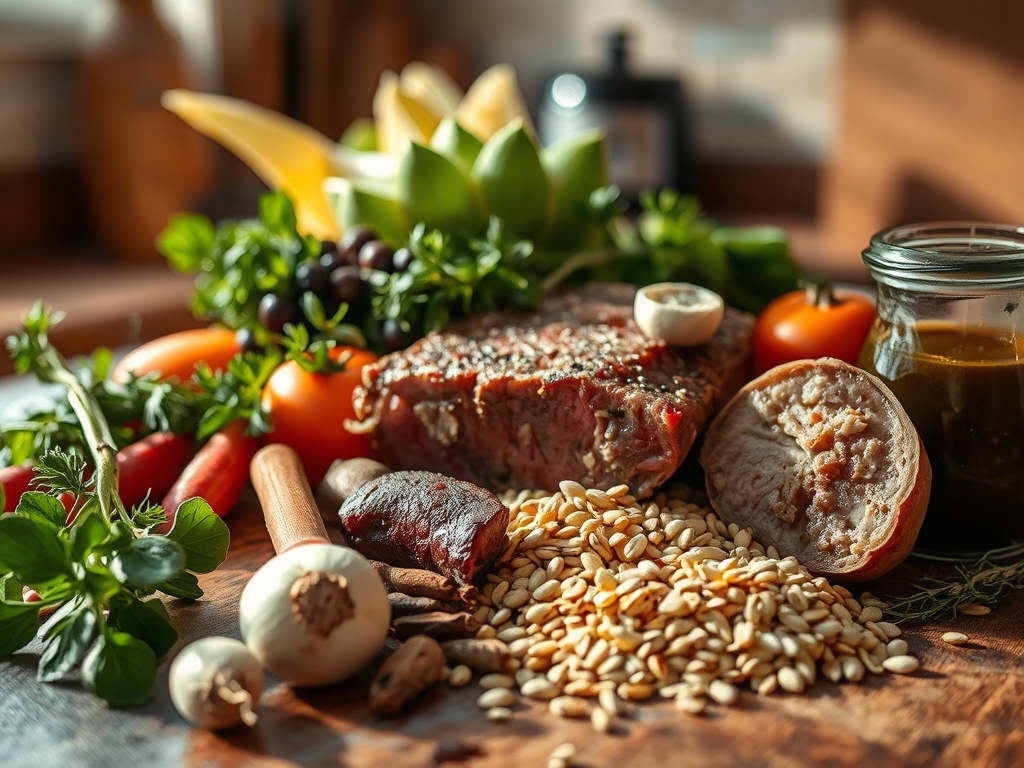
The Gathers:
To achieve a viscous and glossy sauce, your mise-en-place must be precise. Start with three pounds of beef chuck. This cut is superior because of its high intramuscular fat and connective tissue. You will also need a mirepoix of carrots, celery, and onions. Use a digital scale to ensure you have roughly 500 grams of aromatics to balance the richness of the protein.
For the liquid base, gather 250ml of a dry red wine like Cabernet Sauvignon and 500ml of high quality bone broth. The acidity in the wine is crucial; it helps break down muscle fibers while providing a piquant counterpoint to the heavy fats. You will also need tomato paste for umami depth and a bouquet garni of fresh thyme, rosemary, and bay leaves.
Smart Substitutions: If you are avoiding alcohol, swap the wine for a mixture of beef stock and two tablespoons of balsamic vinegar. The acetic acid provides a similar structural breakdown. If you lack a traditional mirepoix, shallots and leeks offer a more delicate, sophisticated aromatic profile. Use a microplane to zest a bit of garlic into the mix for an immediate hit of sulfurous depth.
The Clock
Efficiency in the kitchen is about "Chef's Flow." Expect 30 minutes of active prep time and 6 to 8 hours of passive cooking.
The flow begins with the Maillard reaction on the stovetop. This takes 10 minutes. While the meat sears, you chop your aromatics using a sharp chef's knife and a bench scraper to move them cleanly to your prep bowls. Once the slow cooker is loaded, the machine takes over. The long duration allows the heat to penetrate the dense center of the roast without toughening the exterior fibers. Always aim for the "Low" setting; high heat can cause the protein to seize, resulting in a stringy texture rather than a melt in your mouth finish.
The Masterclass
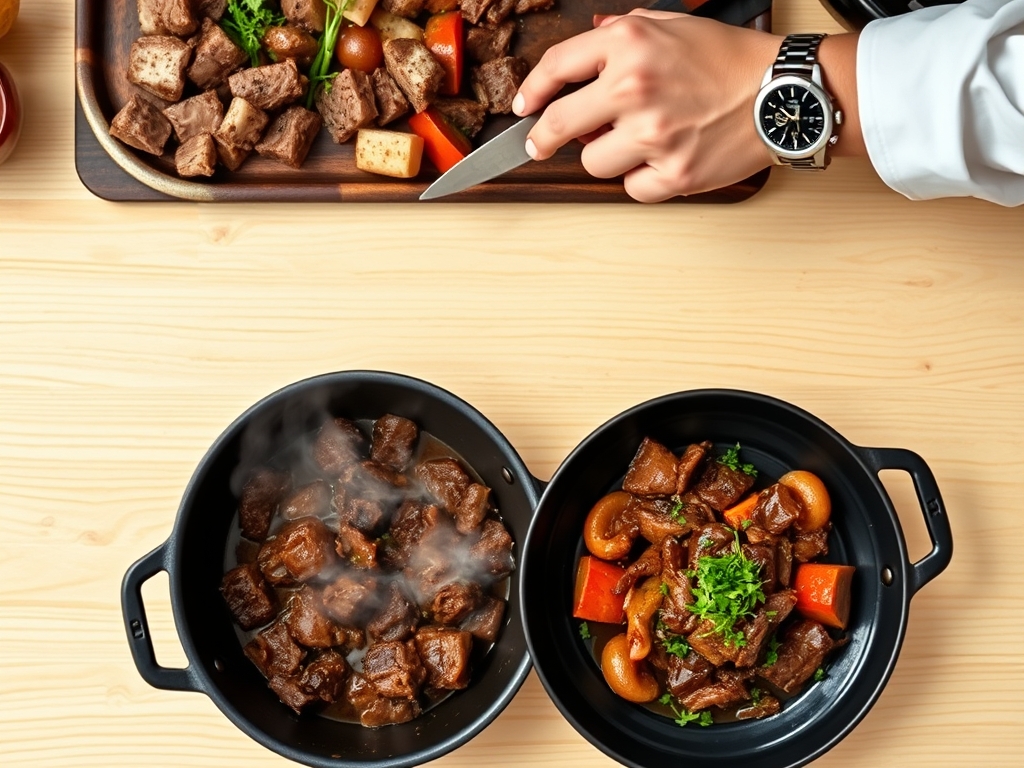
1. The High Heat Sear
Pat your beef bone-dry with paper towels. Season aggressively with kosher salt. Heat a heavy-bottomed skillet until the oil shimmers. Sear the beef in batches until a deep, dark crust forms on all sides.
Pro Tip: This is enzymatic browning. The proteins and sugars on the surface of the meat rearrange to create hundreds of new flavor compounds. If the meat is wet, it will steam instead of sear, robbing you of that essential crust.
2. Deglazing the Fond
Remove the meat and toss in your aromatics. Once they soften, pour in the wine. Use a wooden spoon to scrape up the brown bits (the fond) stuck to the bottom of the pan.
Pro Tip: Those brown bits are concentrated flavor gold. Deglazing captures these caramelized particles and incorporates them into your braising liquid, ensuring a complex, layered sauce.
3. The Tomato Paste Bloom
Push the vegetables to the side and add your tomato paste directly to the hot metal. Stir for two minutes until it turns a rusty brick color.
Pro Tip: This process, called caramelizing the sugars, removes the raw, metallic taste of the paste and develops a savory, sun dried sweetness that anchors the sauce.
4. Layering the Slow Cooker
Place the seared meat into the slow cooker. Pour the deglazed vegetable mixture and the bone broth over the top. The liquid should cover about two-thirds of the meat.
Pro Tip: Total immersion is not necessary for a braise. The steam trapped under the lid creates a convection effect, while the exposed top of the meat continues to develop flavor through evaporative cooling.
5. The Gentle Simmer
Set your device to low. Resist the urge to peek. Every time you lift the lid, you lose significant thermal energy and moisture.
Pro Tip: Maintaining a steady internal temperature of roughly 190 degrees Fahrenheit is the "sweet spot" for collagen conversion. Fluctuations in temperature can result in unevenly cooked fibers.
6. The Fat Separation
Once the beef is tender, use tongs to remove it to a warm platter. Pour the remaining liquid into a saucier or a fat separator.
Pro Tip: Removing the rendered fat ensures your sauce is silky rather than greasy. A clean sauce allows the herbal notes of the thyme and rosemary to shine through without being masked by heavy lipids.
7. The Final Reduction
Simmer the liquid on the stove until it coats the back of a spoon. Whisk in a knob of cold butter at the very end to emulsify the sauce.
Pro Tip: This is called monter au beurre. The cold butter creates a stable emulsion with the reduced liquid, giving your braised beef a professional, glossy finish and a luxurious mouthfeel.
The Deep Dive
Macro Nutrition: A standard serving of braised beef provides approximately 35g of protein and 22g of fat. It is a powerhouse of iron and Vitamin B12. To keep it lean, trim excess external fat before searing, though leave the internal marbling for flavor.
Dietary Swaps: For a Keto version, serve over cauliflower mash instead of potatoes. For Vegan guests, replace the beef with large chunks of Lion's Mane mushrooms or seitan; reduce the cooking time to 2 hours to avoid mushiness. For Gluten Free needs, ensure your beef broth is certified and use cornstarch instead of flour if you need extra thickening.
The Fix-It:
- Tough Meat: If it is still chewy, it hasn't cooked long enough. Put the lid back on for another hour.
- Bland Sauce: Add a splash of red wine vinegar or a squeeze of lemon. Acidity "wakes up" the heavy flavors.
- Too Salty: Add a peeled, halved potato to the pot for the last 30 minutes to absorb excess sodium.
Meal Prep: Braised beef is actually better on day two. As it cools, the muscle fibers soak up the surrounding sauce like a sponge. When reheating, do so gently on the stove with a splash of water to prevent the fats from breaking and becoming oily.
The Wrap-Up
Mastering slow cooker braised beef recipes is a rite of passage for any home cook. It teaches you patience, the importance of the sear, and the science of sauce reduction. You have taken a rugged cut of meat and transformed it into a sophisticated, soul warming meal. Serve this over creamy polenta or wide egg noodles, and watch your friends marvel at your culinary prowess. You have officially hacked the slow cooker.
The Kitchen Table
Can I put frozen beef in the slow cooker?
No, you should never cook frozen meat in a slow cooker. It stays in the "danger zone" for bacteria growth too long. Always thaw your beef completely in the refrigerator before starting your braise for food safety.
Why is my braised beef dry even with liquid?
High heat causes muscle fibers to contract and squeeze out moisture. If your beef feels dry or "stringy," you likely cooked it on the "High" setting. Always use "Low" to allow the collagen to melt without toughening the protein.
Do I really need to sear the meat first?
Searing is essential for flavor. While the slow cooker will cook the meat without it, you miss out on the Maillard reaction. Searing creates the complex, savory notes that define a truly great braise; don't skip this step.
How do I make the sauce thicker?
The best way is to reduce the liquid in a saucier on the stovetop after cooking. Alternatively, whisk a teaspoon of cornstarch with cold water to create a slurry and stir it into the bubbling sauce for an instant thickener.