
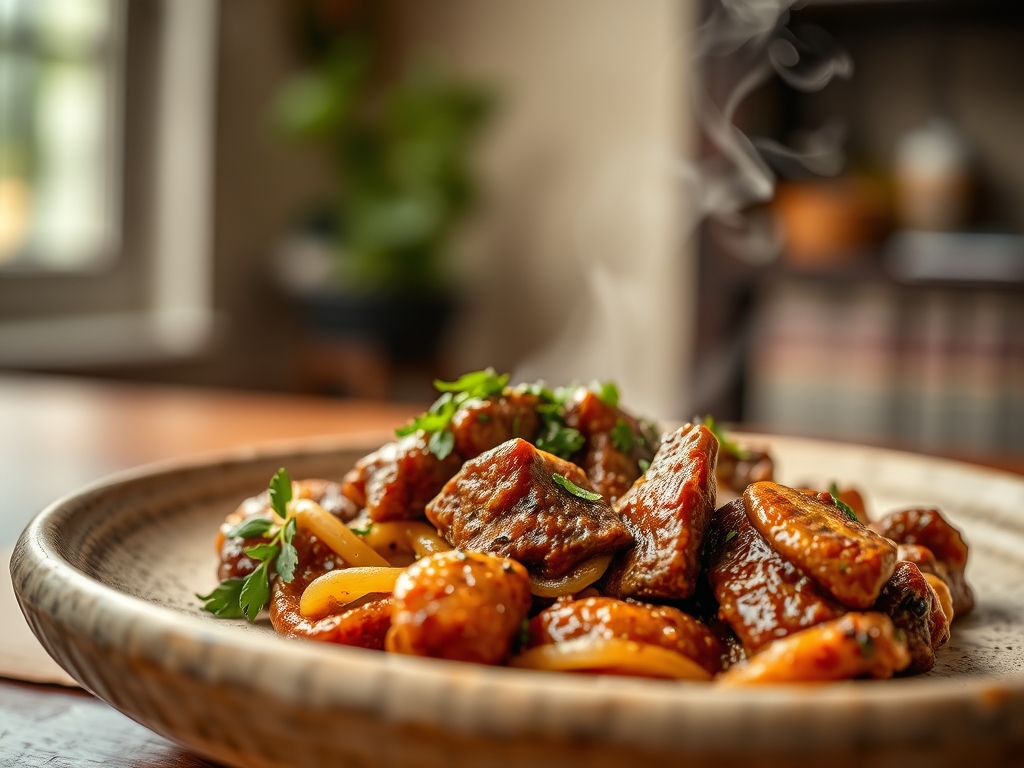
The air in my kitchen currently smells like a spice market in Marrakech; it is thick with the scent of toasted cumin and the heavy, sweet perfume of slow-simmered cinnamon. If you have been searching for the ultimate collection of moroccan beef recipes, you have finally arrived at the intersection of comfort and high-level culinary science. We are not just making dinner; we are engineering flavor through centuries of North African tradition. Moroccan beef recipes are celebrated for their ability to balance the savory depth of red meat with the high-acid brightness of preserved lemons and the earthy warmth of Ras el Hanout.
This is where your heavy-bottomed skillet becomes a laboratory. We are going to explore eight distinct variations of these classics, from the gelatinous luxury of a slow-cooked shank to the charred, piquant edges of grilled kefta. The secret is not just in the spices but in how we manipulate heat to transform tough connective tissues into silk. Grab your favorite apron and let us get into the grit of it.
The Gathers:
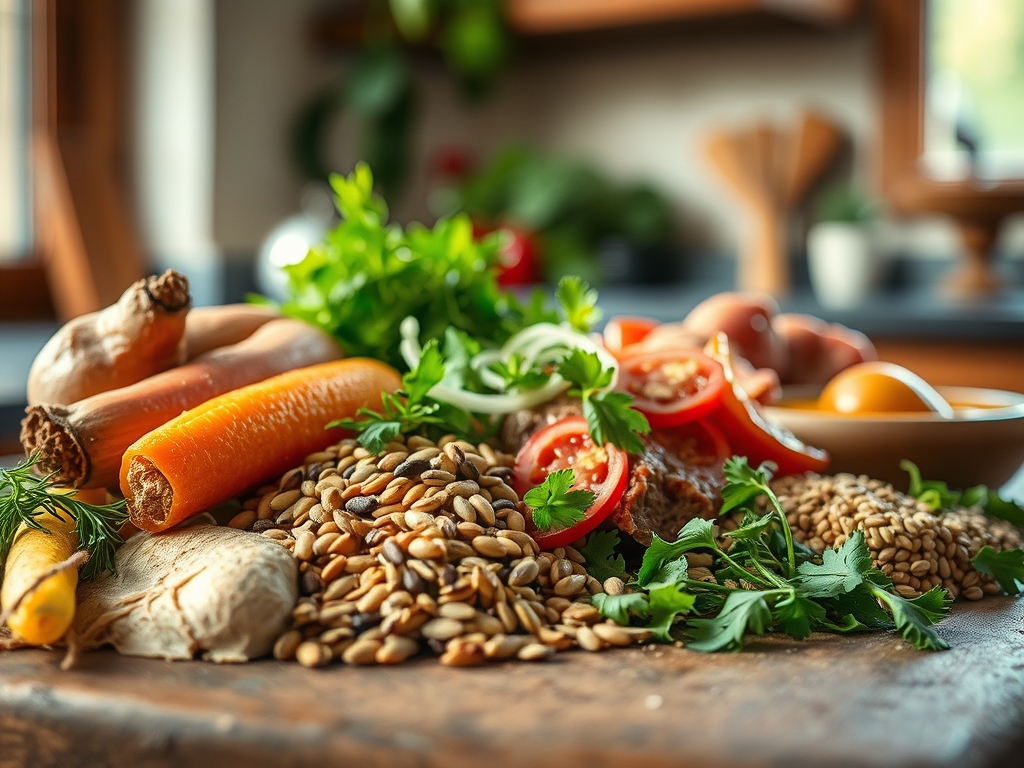
Setting up your mise-en-place is the difference between a chaotic kitchen and a professional workflow. For these moroccan beef recipes, your counter should look like a botanical display. You will need high-quality beef cuts; specifically, look for chuck roast or shank. These cuts are high in collagen, which will hydrolyze into gelatin during the long braising process, creating a viscous, mouth-coating sauce.
Your spice rack is the protagonist here. You need whole cumin seeds, coriander, turmeric, and the complex blend known as Ras el Hanout, which can contain up to thirty different ingredients. Use a microplane to grate fresh ginger and garlic into a fine paste; this increases the surface area, allowing the aromatics to infuse the oil more efficiently. You will also need preserved lemons for that distinct fermented salinity and dried apricots or prunes to provide a sugary counterpoint to the salt.
Smart Substitutions: If you cannot find preserved lemons, use a mixture of lemon zest and kosher salt. If you are out of Ras el Hanout, a blend of cinnamon, ginger, cardamom, and clove will mimic the profile. For a leaner approach, you can swap the beef for lamb, though the rendering process will produce a different lipid profile.
The Clock
Efficiency in the kitchen is about understanding the Chef's Flow. For most moroccan beef recipes, you are looking at a preparation time of 30 to 45 minutes and a cooking duration of 2 to 3 hours. The "flow" starts with the sear. While the beef is browning, you should be dicing your aromatics. Never crowd the pan; work in batches to ensure the temperature of the skillet stays high enough to trigger the Maillard reaction.
Once the beef is seared and the vegetables are softened, the "passive phase" begins. This is when the heat does the heavy lifting. If you are using a traditional clay tagine, the conical shape will capture steam and return it to the base, self-basting the meat. If you are using a standard Dutch oven, ensure the lid is tight to prevent evaporation and keep the environment humid.
The Masterclass
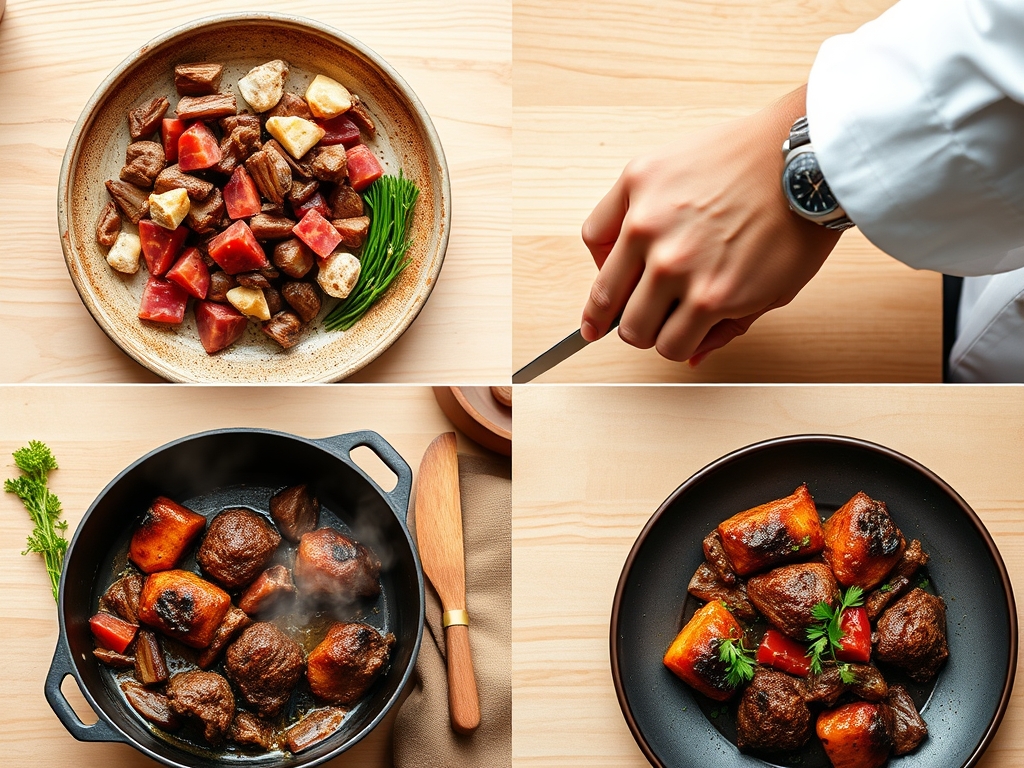
1. The Sear and Fond Development
Place your beef cubes in a heavy-bottomed skillet with high-smoke-point oil. Do not move them until a deep brown crust forms. Use tongs to flip each piece individually.
Pro Tip: This crust is the result of the Maillard reaction, where amino acids and reducing sugars rearrange to create hundreds of flavor compounds. This "fond" at the bottom of the pan is the foundation of your sauce.
2. Deglazing the Aromatics
Add your onions and celery to the pan. As they release moisture, use a bench scraper or wooden spoon to scrape up the browned bits from the bottom.
Pro Tip: This process is called deglazing. The liquid from the vegetables dissolves the caramelized proteins, incorporating them back into the dish for maximum umami.
3. Blooming the Spices
Push the vegetables to the side and add your spices directly to the hot oil in the center of the pan for 30 seconds until fragrant.
Pro Tip: Spices contain fat-soluble volatile oils. Blooming them in fat unlocks these aromas, ensuring the flavor permeates the entire dish rather than just sitting on the surface.
4. The Low and Slow Braise
Return the beef to the pot, add your stock and dried fruits, and lower the heat to a bare simmer. The liquid should just barely bubble.
Pro Tip: Keeping the temperature below boiling prevents the muscle fibers from tightening and squeezing out moisture. This preserves the internal juiciness of the meat.
5. Emulsifying the Sauce
Once the meat is tender, remove it and crank up the heat to reduce the liquid. Whisk in a cold knob of butter or a splash of olive oil.
Pro Tip: Reducing the liquid concentrates the solutes. By whisking in fat at the end, you create a stable emulsion, resulting in a glossy, professional finish.
The Deep Dive
When we look at the macro nutrition of these moroccan beef recipes, we see a powerhouse of protein and healthy fats. A standard serving provides roughly 35 grams of protein and a significant dose of iron and B12. To keep it Keto-friendly, simply omit the dried fruits and serve over cauliflower rice. For a Vegan version, swap the beef for hearty portobello mushrooms or chickpeas; the cooking time will drop significantly, but the spice profile remains identical.
The Fix-It:
- Tough Meat: If the beef is chewy, it simply has not cooked long enough for the collagen to break down. Add a splash of water and continue simmering.
- Bitter Sauce: This usually happens if the spices were burnt during the blooming phase. Add a teaspoon of honey or a pinch of sugar to balance the bitterness.
- Greasy Texture: If too much fat rendered out, use a wide spoon to skim the "scum" or oil from the surface, or toss in a piece of bread to soak it up.
Meal Prep Science: These dishes actually taste better on day two. As the stew cools, the spices continue to diffuse through the fats, and the meat reabsorbs the flavorful cooking liquid. When reheating, use a saucier over low heat and add a tablespoon of water to restore the original viscosity.
The Wrap-Up
Mastering moroccan beef recipes is about more than just following a list of ingredients; it is about understanding how heat, acid, and time interact to create something soulful. Whether you are serving a crowd or just treating yourself to a week of gourmet lunches, these techniques will elevate your kitchen game to professional levels. Go forth, grab your spices, and let the Maillard reaction work its magic. Your kitchen is now the best restaurant in town.
The Kitchen Table
How do I make the beef more tender?
The secret is time and temperature. Use a cut like chuck roast and simmer it at a very low heat for at least two hours. This allows the tough collagen to melt into silky gelatin without drying out the muscle fibers.
What is the best way to reheat leftovers?
Reheat slowly in a saucepan over low heat. Add a splash of beef stock or water to loosen the sauce. Avoid the microwave, as it can cause the proteins to tighten and become rubbery through uneven heating.
Can I make these recipes in a slow cooker?
Yes, but you must sear the meat in a skillet first. The slow cooker does not reach high enough temperatures to create the Maillard reaction, so browning the beef beforehand is essential for a deep, savory flavor profile.
What should I serve with Moroccan beef?
Fluffy couscous is the traditional choice as it absorbs the sauce beautifully. For a grain-free option, try roasted root vegetables or a crisp salad with plenty of lemon and parsley to cut through the richness of the beef.