
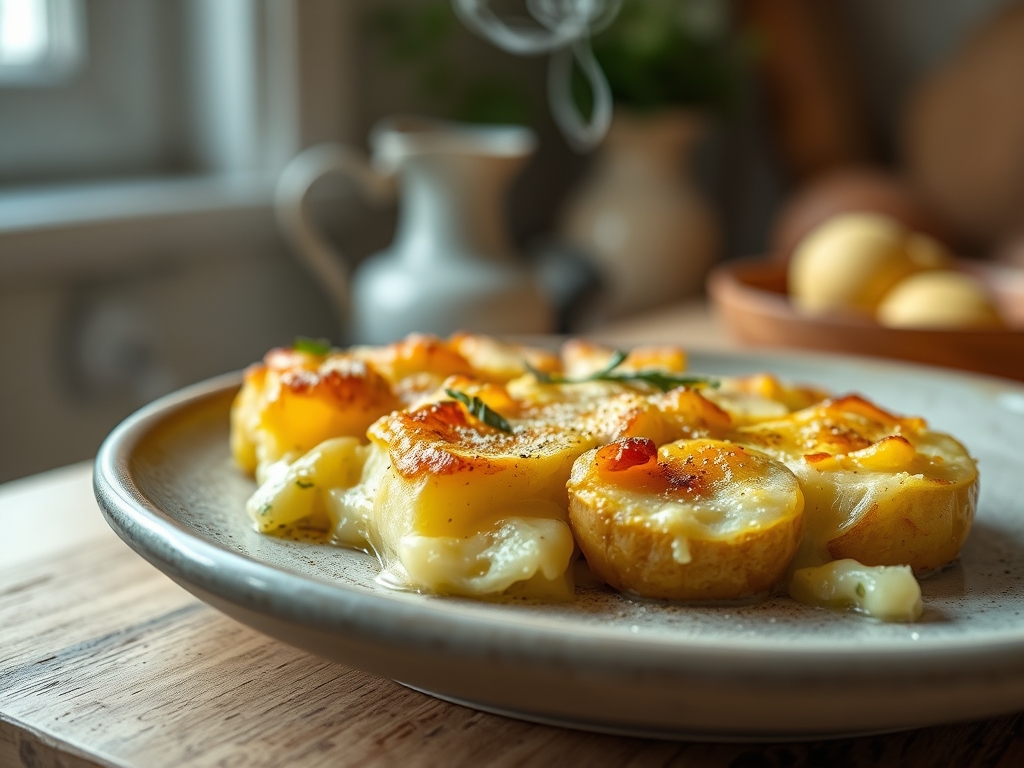
Picture a kitchen filled with the scent of toasted nuts and bubbling cream. There is something deeply primal about the way high-fat dairy interacts with a starchy tuber; it creates a comfort that transcends simple hunger. When you master au gratin potato recipes gruyere cheese, you are not just making a side dish. You are engineering a masterpiece of French-inspired comfort.
Imagine pulling a heavy ceramic dish from the oven. The surface is a landscape of golden-brown craters and molten peaks. As your spoon breaks through the burnished crust, a cloud of steam releases the aroma of nutmeg and aged Alpine milk. This is the ultimate dinner party flex. It is elegant, decadent, and scientifically designed to be the best thing your guests eat all year.
The Gathers:
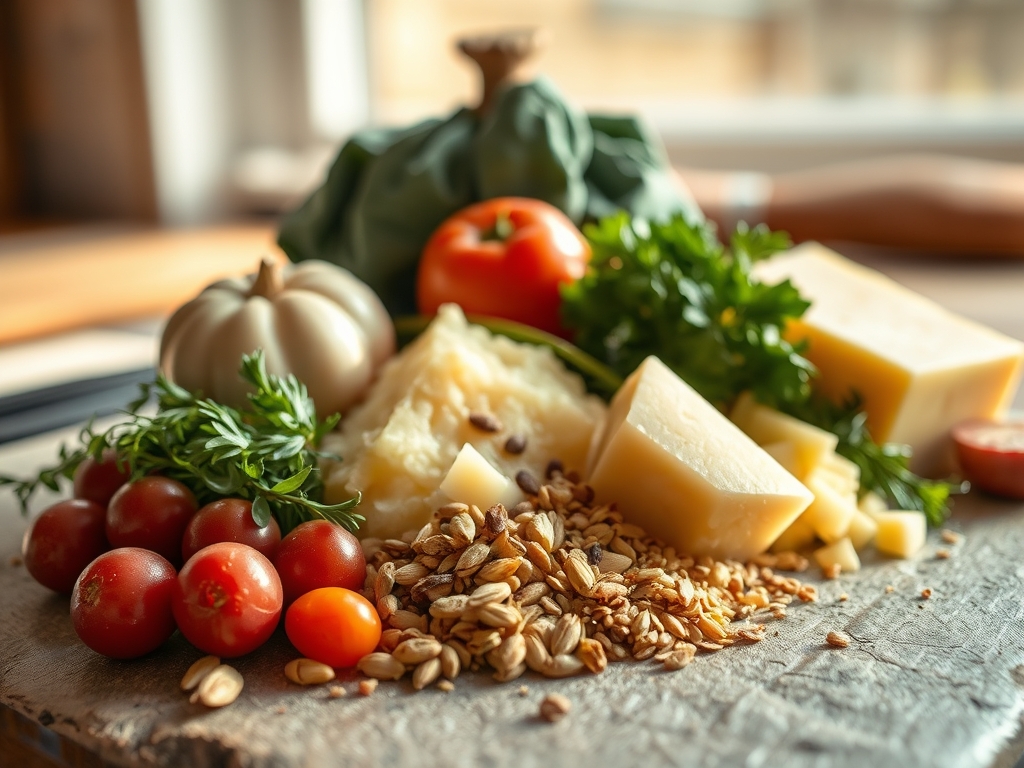
To achieve a professional result, your mise-en-place must be precise. We are looking for high-starch content to ensure the sauce becomes viscous rather than watery. Reach for Russets or Yukon Golds. Russets provide the starch needed for thickening, while Yukons offer a buttery, waxy structure that holds its shape under heat.
The star is the Gruyere cheese. This Swiss classic is prized for its high oil-to-water ratio, which allows it to melt without breaking into a greasy mess. You will also need heavy cream (minimum 36 percent milkfat), whole milk, fresh garlic, and thyme. Use a microplane to grate your cheese finely; this increases the surface area, ensuring it melts instantly into the sauce.
Smart Substitutions: If Gruyere is unavailable, look for Comte or Emmental. These are also Alpine-style cheeses with similar melting points. For a piquant kick, you can swap ten percent of the cheese for an aged Sharp Cheddar. If you must go dairy-free, a blend of full-fat coconut milk and nutritional yeast can mimic the richness, though the Maillard reaction will be less pronounced.
The Clock:
Efficiency in the kitchen is about the Chef's Flow. Expect about 30 minutes of active prep time. This includes peeling, slicing, and preparing the infused cream base. The baking process is a slow-burn affair, typically taking 60 to 75 minutes at 375 degrees Fahrenheit.
The most important part of the clock is the rest period. You must allow the dish to sit for at least 15 minutes after it leaves the oven. This allows the starches to reabsorb the liquid as the temperature drops, preventing a "soupy" presentation when you finally slice into it.
The Masterclass:
1. The Precision Slice
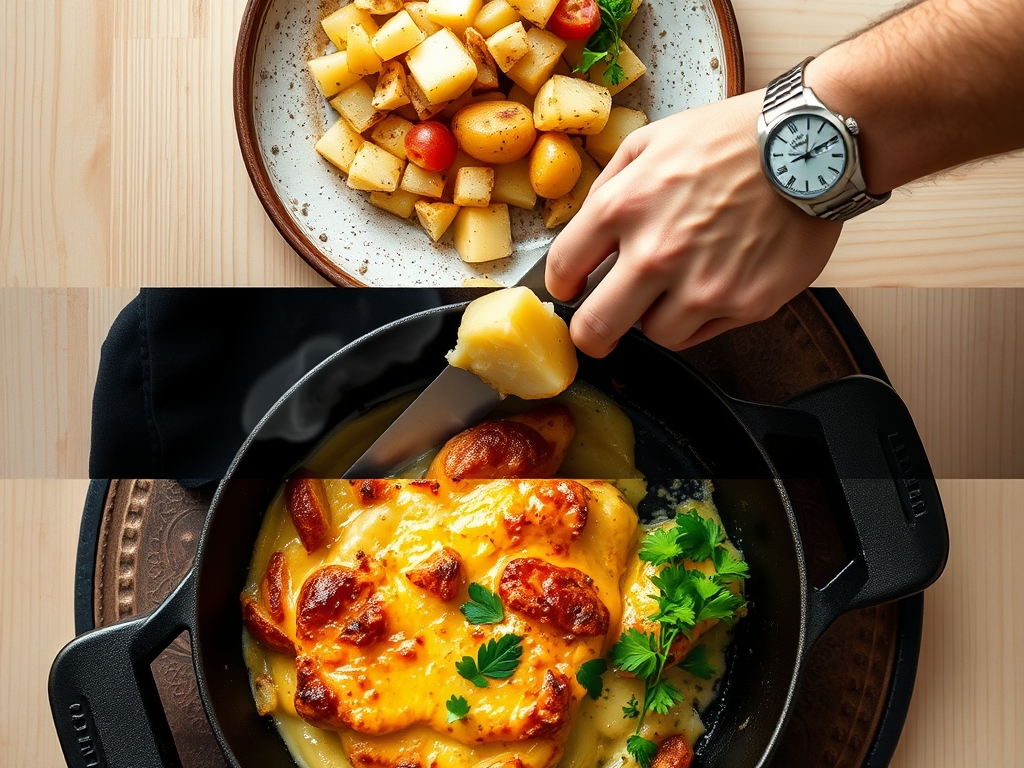
Use a mandoline to slice your potatoes to a uniform thickness of 1/8 inch. Consistency is the key to even cooking. If some slices are thicker than others, you will end up with a mix of mushy and crunchy bites.
Pro Tip: Do not soak your potato slices in water. We need the surface starch to act as a natural thickener for the cream. This is called starch gelatinization, where the granules swell and burst to create a velvety mouthfeel.
2. The Aromatic Infusion
In a saucier, combine your cream, milk, smashed garlic cloves, and thyme sprigs. Heat this over medium-low until it barely simmers. Do not let it boil vigorously, or the proteins may denature and clump.
Pro Tip: Infusing the liquid before it hits the potatoes ensures that the flavor is distributed evenly. This technique avoids "garlic hot spots" and allows the essential oils in the herbs to aerate through the fat.
3. The Layering Logic
Butter your baking dish generously. Arrange the potato slices in overlapping rows, seasoning every single layer with kosher salt and white pepper. Pour a portion of the infused cream over each layer and sprinkle with the finely grated Gruyere.
Pro Tip: Seasoning each layer is vital because potatoes are incredibly bland. Salt acts as a bridge, enhancing the piquant notes of the cheese and the sweetness of the cream.
4. The Foil Shield
Cover the dish tightly with aluminum foil for the first 40 minutes of baking. This creates a steam chamber that softens the potatoes without drying out the top layer of cheese.
Pro Tip: This stage is about conductive heat. The foil prevents the moisture from evaporating too quickly, ensuring the potatoes are fully hydrated and tender before the browning begins.
5. The Gratinade Reveal
Remove the foil and add a final, heavy layer of Gruyere. Return the dish to the oven. If you want a truly professional finish, use the broiler for the last two minutes to create a shattered-glass texture on the cheese.
Pro Tip: This is where the Maillard reaction happens. The sugars in the dairy and the proteins in the cheese react under high heat to create hundreds of new flavor compounds that taste like toasted nuts and caramel.
6. The Essential Rest
Once the dish is bubbling and golden, pull it out and set it on a wire rack. Use a digital scale to weigh your patience; you need 15 minutes of cooling time to ensure the structural integrity of the stack.
Pro Tip: This period allows for thermal carryover. The internal temperature will continue to rise slightly, finishing the cook of the center potatoes while the sauce sets into a custard-like consistency.
The Deep Dive:
Macro Nutrition: A standard serving of this dish is calorie-dense, providing roughly 450 calories, 32g of fat, and 28g of carbohydrates. It is a high-energy side dish designed for celebration.
Dietary Swaps: For a Keto version, swap the potatoes for sliced cauliflower or daikon radish. For a Gluten-Free version, you are already safe; this recipe relies on potato starch rather than a flour-based roux.
The Fix-It:
- Broken Sauce: If the sauce looks oily, your oven was too hot. Fix this next time by lowering the temp or adding a splash of cold cream mid-bake to emulsify the fats.
- Crunchy Potatoes: You likely sliced them too thick or didn't cover them well. Fix this by adding a bit more hot milk and popping them back in under foil.
- Bland Flavor: You skipped seasoning the layers. Fix this by serving with a sprinkle of flaky sea salt and fresh chives on top.
Meal Prep: To reheat, avoid the microwave. Use an oven at 325 degrees Fahrenheit and cover with foil to prevent the cheese from becoming tough. This maintains the "day-one" creamy texture by gently vibrating the water molecules without exploding them.
The Wrap-Up:
Mastering au gratin potato recipes gruyere cheese is a rite of passage for any serious home cook. It is the perfect marriage of chemistry and comfort. By focusing on the starch content, the infusion of the cream, and the controlled browning of the Alpine cheese, you create a dish that is far more than the sum of its parts. Now, grab your mandoline and get slicing; your kitchen is about to smell like a five-star bistro!
The Kitchen Table:
Can I make this dish ahead of time?
Yes. You can assemble and bake the dish a day early. Store it in the refrigerator and reheat it at 350 degrees Fahrenheit. The flavors often deepen overnight as the potatoes continue to absorb the aromatic cream.
Why is my cheese sauce grainy?
Graininess usually happens if the cheese is pre-shredded or the heat is too high. Pre-shredded cheese contains potato starch or cellulose to prevent clumping, which ruins the melt. Always grate your Gruyere fresh from the block for a smooth finish.
What is the best potato for au gratin?
Yukon Golds are the gold standard. They possess a naturally buttery flavor and a medium-starch content. This allows them to hold their shape during the long bake while still releasing enough starch to thicken the sauce into a velvety coating.
Do I need to peel the potatoes?
While traditional recipes call for peeling, leaving the skins on Yukon Golds adds a rustic texture and extra nutrients. However, for a classic, elegant French presentation, peeling is preferred to ensure the focus remains on the creamy, white layers and golden cheese.