
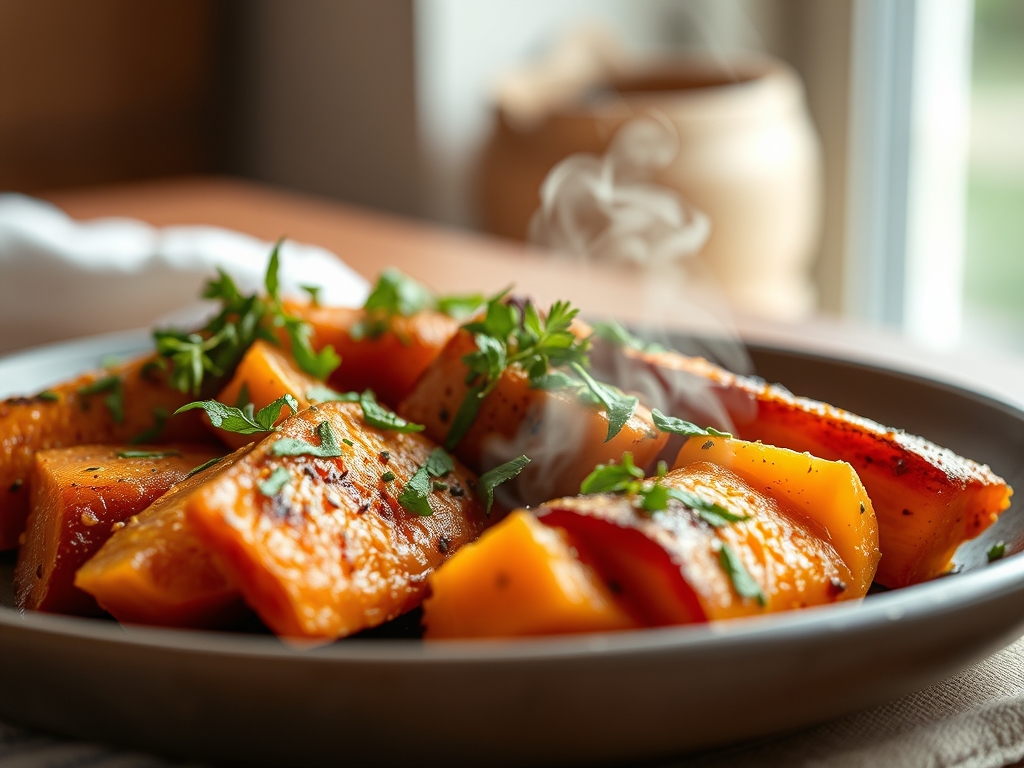
The aroma of roasting tubers is a chemical love letter written in the language of caramelization. When you search for delicious sweet potato recipes, you are actually seeking the perfect balance of maltose and moisture. This root vegetable is a biological marvel; its starches convert into sugars through endogenous amylase activity as heat climbs. It is time to elevate your kitchen game.
Forget the soggy, marshmallow-topped side dishes of the past. We are diving into a world where high-heat roasting meets piquant acids and velvety fats. Whether you are craving a smoky chipotle glaze or a bright miso-tahini drizzle, understanding the molecular structure of the sweet potato is your secret weapon. We are about to transform a humble starch into a centerpiece that commands attention. Grab your favorite apron and a sharp chef's knife; we are going deep into the science of flavor.
The Gathers:
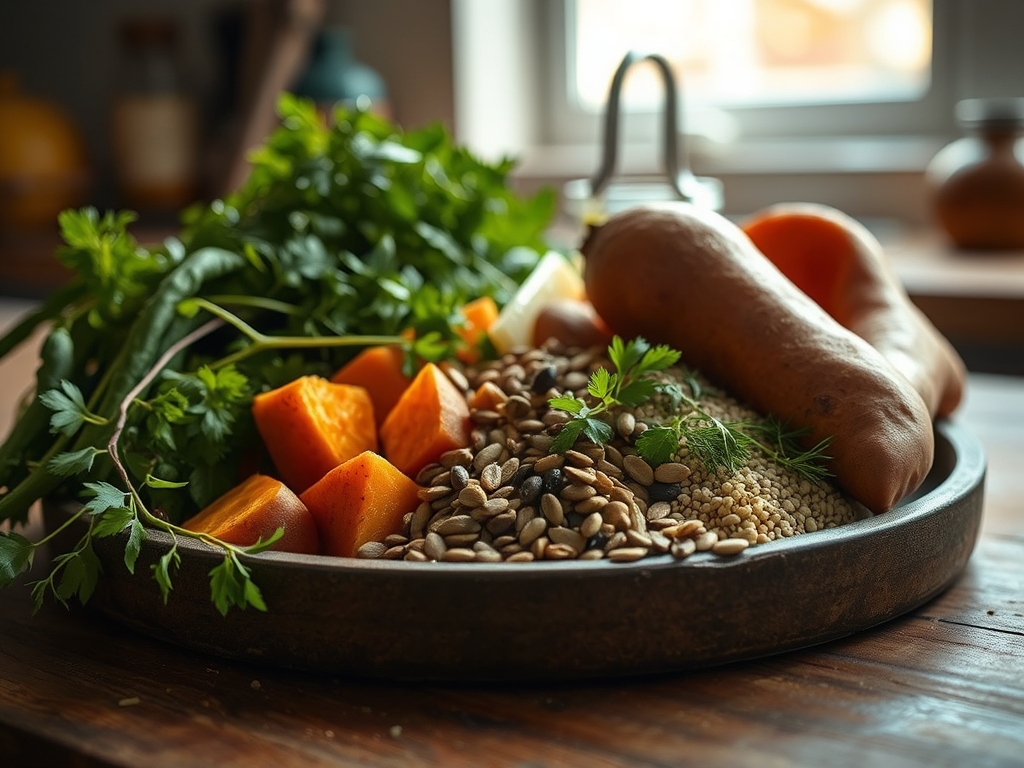
To execute these delicious sweet potato recipes, your mise-en-place must be precise. Start with firm, heavy-for-their-size specimens. The skin should be taut, indicating high cellular turgor pressure. You will need a high-smoke-point fat like avocado oil or clarified butter to facilitate the Maillard reaction without acrid scorching.
For the flavor profiles, gather your aromatics: fresh ginger for its zingy gingerol compounds, garlic for sulfurous depth, and rosemary for its resinous oils. You will also need a variety of acids to provide a counterpoint to the natural sweetness. Think of bright lime juice, aged balsamic vinegar, or a splash of apple cider vinegar. Textural contrast is non-negotiable, so keep toasted pepitas, flaky sea salt, and pomegranate arils within reach on your workstation.
Smart Substitutions: If you are out of traditional orange-fleshed jewels, Japanese Murasaki potatoes offer a nuttier, starchier profile. No maple syrup? Use honey or agave, but keep in mind that honey caramelizes at a lower temperature, so monitor your oven closely. If you need a dairy-free creamy element, a well-shaken can of full-fat coconut milk provides the necessary lipids to carry fat-soluble vitamins.
The Clock
Efficiency in the kitchen is all about the Chef's Flow. This is the art of overlapping tasks so that no second is wasted. Total active prep time for these variations is roughly 15 minutes, while the thermal transformation in the oven takes 35 to 45 minutes.
Start by preheating your oven to 425 degrees Fahrenheit. This high heat is essential for rapid evaporation of surface moisture, which allows the exterior to crisp before the interior turns to mush. While the oven reaches its target, perform your knife work. By the time your sheet pan is loaded, the oven is ready. Use the roasting time to whisk together your glazes and prep your garnishes. This ensures that the moment the potatoes emerge with their golden-brown crust, you are ready to assemble and serve while the internal temperature is at its peak.
The Masterclass
1. Precision Slicing and Surface Area
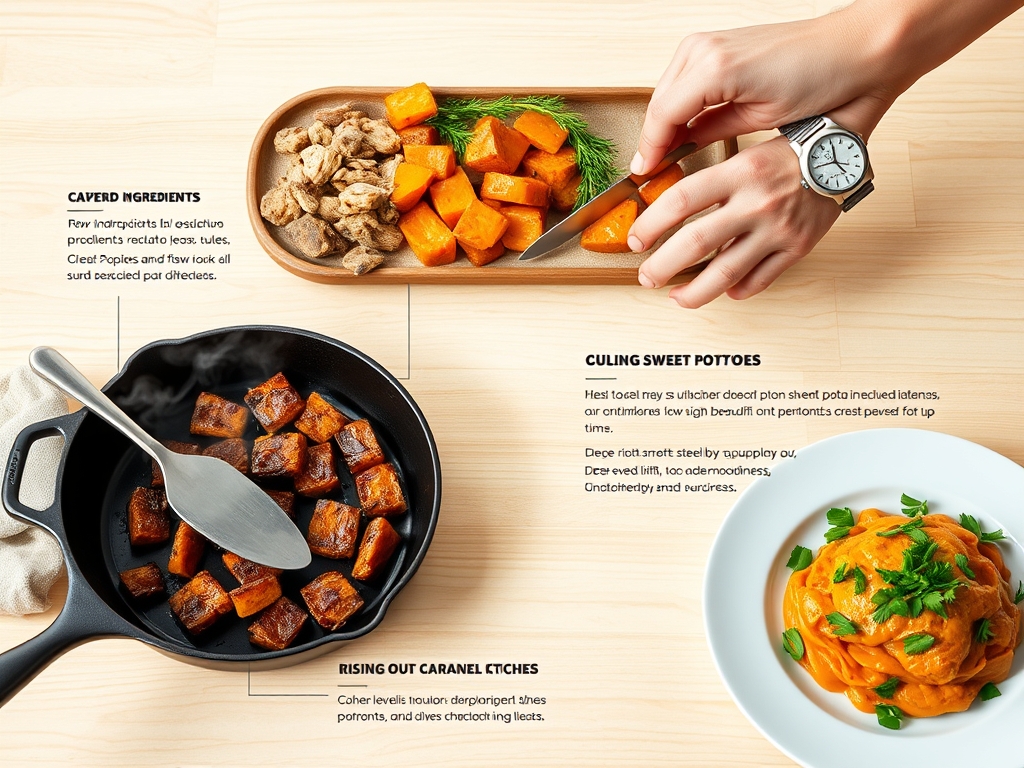
Using a sharp chef's knife or a mandoline, cut your potatoes into uniform shapes. Uniformity is not just for aesthetics; it ensures that every piece reaches the same internal temperature simultaneously. Aim for 1-inch cubes or wedges to maximize surface area for browning.
Pro Tip: This technique leverages the Maillard reaction, a chemical reaction between amino acids and reducing sugars. By increasing surface area, you provide more sites for this reaction to occur, resulting in that savory, toasted flavor profile.
2. The Lipid Coating
Place your cut potatoes in a large stainless steel bowl. Drizzle with your chosen fat and toss vigorously using a pair of silicone tongs. You want a thin, even sheen on every surface. If the potatoes look dry, they will dehydrate rather than roast.
Pro Tip: Fat acts as a thermal conductor. It transfers heat from the oven's air to the vegetable more efficiently than air alone. This prevents enzymatic browning from turning into simple rot and instead promotes a crisp, golden exterior.
3. Strategic Spacing on the Sheet Pan
Spread the potatoes across a heavy-bottomed baking sheet. Ensure there is at least half an inch of space between each piece. If you crowd the pan, the moisture escaping from the potatoes will create a steam cloud, leading to a soft, boiled texture rather than a crisp roast.
Pro Tip: This avoids evaporative cooling. When pieces are too close, the steam cannot escape quickly enough, keeping the surface temperature of the potato below the threshold required for caramelization.
4. The Mid-Roast Agitation
Halfway through the cooking time, use a metal bench scraper or a sturdy spatula to flip and rotate the potatoes. This ensures that the side in contact with the hot metal pan does not over-darken while the top remains pale.
Pro Tip: This accounts for thermal gradients within your oven. Most home ovens have hot spots; rotating the pan ensures even heat distribution and prevents localized scorching of the natural sugars.
5. The Infusion and Glaze
In the final five minutes of roasting, apply your viscous glazes or fresh herbs. This allows the flavors to fuse without burning the delicate sugars in the glaze or turning the herbs into bitter ash.
Pro Tip: This late-stage addition utilizes residual heat to bloom the volatile oils in herbs and spices, ensuring the aromatics are potent and fresh rather than muted by long-term heat exposure.
The Deep Dive
From a macro perspective, sweet potatoes are a powerhouse of complex carbohydrates and beta-carotene. A medium potato provides significant fiber, which slows the glucose response in your bloodstream. To keep these delicious sweet potato recipes keto-friendly, focus on smaller portions paired with high-fat dressings like tahini or avocado lime crema. For vegan guests, swap butter for miso-infused olive oil to maintain a savory "umami" profile.
The Fix-It:
- Soggy Potatoes: Your oven temp was too low or the pan was crowded. Fix it by cranking the heat to 450 degrees for the last five minutes.
- Burnt Edges, Raw Middle: The pieces were cut too large. Fix it by covering the pan with foil to trap steam and finish the interior, then flash-roast uncovered.
- Bland Flavor: You lacked acid. Fix it by finishing the dish with a squeeze of lemon or a dash of hot sauce to brighten the sugars.
Meal Prep: To maintain "day-one" quality, do not microwave your leftovers. Instead, use a toaster oven or an air fryer at 375 degrees for four minutes. This re-activates the fats and crisps the skin through convection heating, avoiding the rubbery texture caused by microwave agitation of water molecules.
The Wrap-Up
You are now equipped with the molecular knowledge to turn a simple root vegetable into a culinary masterpiece. These delicious sweet potato recipes are more than just instructions; they are a celebration of chemistry and flavor. By mastering the balance of heat, fat, and acid, you can create side dishes that are the star of the show. Go forth, experiment with your seasonings, and remember that the best cooking happens when you understand the "why" behind the "how." Your kitchen is your laboratory; make it delicious!
The Kitchen Table
How do I stop sweet potatoes from getting mushy?
Ensure you roast them at high heat, at least 425 degrees, and do not crowd the pan. This allows steam to escape quickly so the exterior can crisp through the Maillard reaction rather than steaming in its own moisture.
Can I eat the skin of the sweet potato?
Absolutely. The skin contains significant fiber and nutrients. When roasted properly with a bit of oil and salt, it becomes crispy and flavorful. Just be sure to scrub the tubers thoroughly with a vegetable brush before slicing to remove grit.
Why do my sweet potatoes turn brown after cutting?
This is enzymatic browning caused by phenols reacting with oxygen. To prevent this, keep your cut potatoes in a bowl of cold water until you are ready to oil and roast them, or cook them immediately after slicing.
What is the best way to reheat sweet potatoes?
Avoid the microwave to prevent sogginess. Use an air fryer or a hot skillet with a tiny bit of oil. This restores the crisp texture by reheating the exterior fats and sugars without making the interior starch too gummy.