
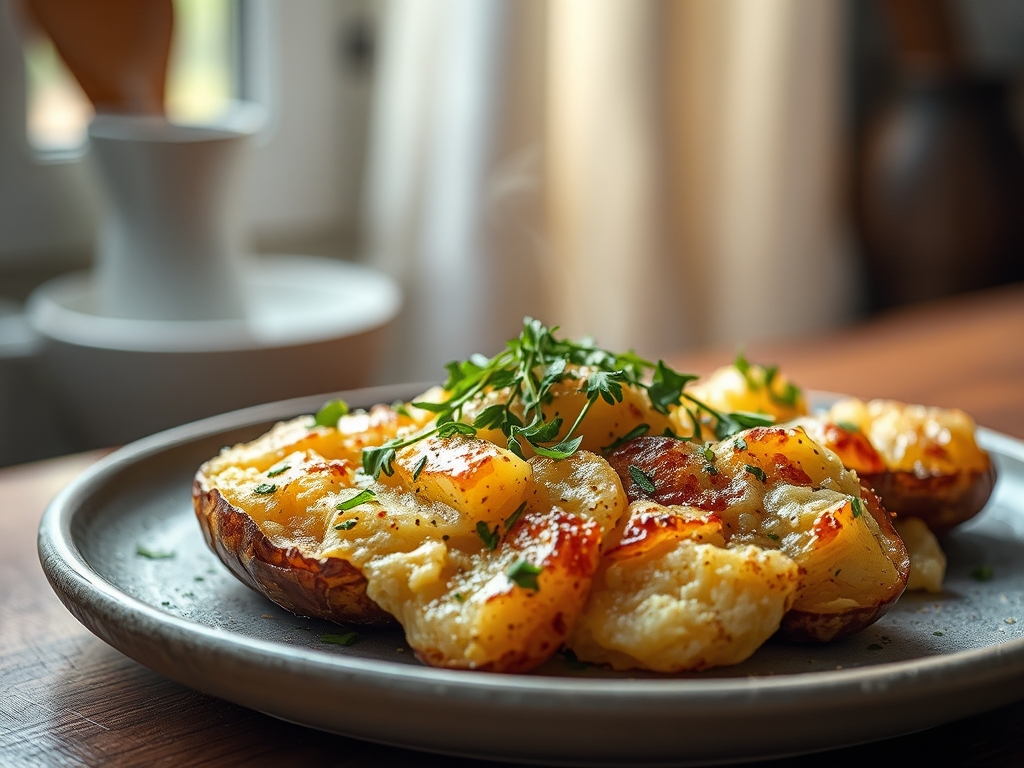
Picture the sound of a glass bottle meeting a hot, salt-encrusted potato skin. It is a sharp, percussive crack that promises a interior as soft as a cloud. If you have been searching for the ultimate air fryer smashed potato recipes, you are likely chasing that specific, elusive contrast. We are talking about the kind of crunch that echoes in your jaw, paired with a center so buttery it practically melts before you can even chew. The air fryer is not just a convenience tool here; it is a high-velocity convection chamber that mimics the intense dry heat of a professional brick oven. By the time we are done, you will understand exactly how to manipulate starch molecules and moisture evaporation to achieve a result that puts traditional roasting to shame. Grab your apron and a cold drink; we are about to turn a humble tuber into a structural masterpiece of culinary engineering.
The Gathers:
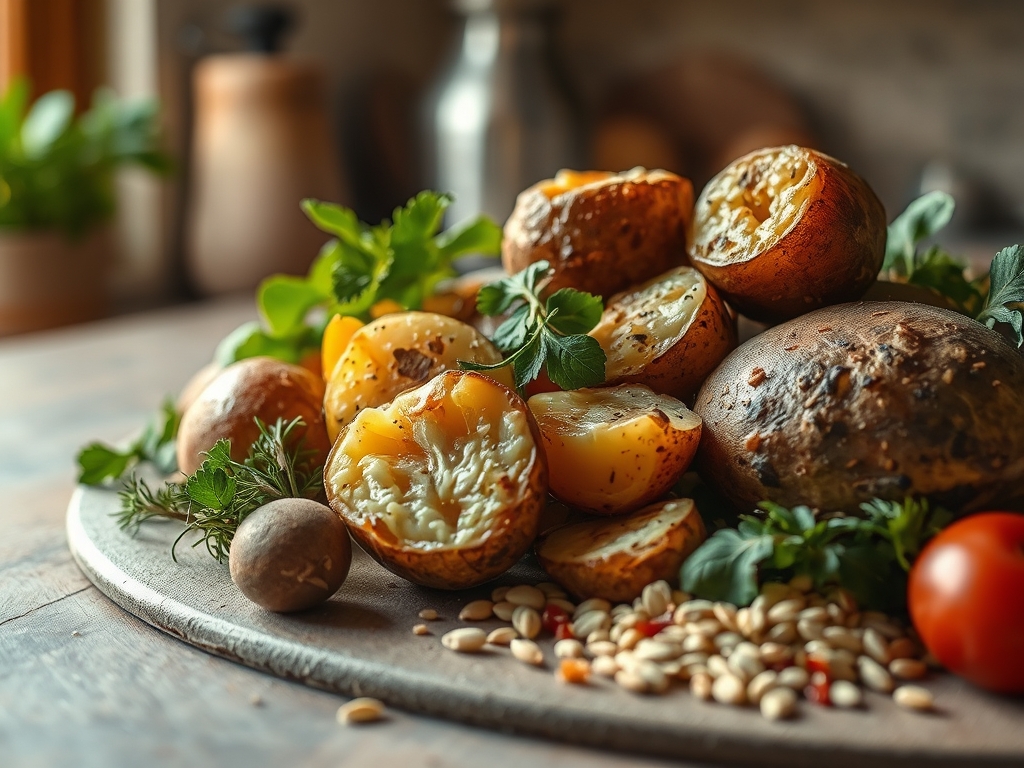
To begin, you need the right raw materials. Reach for a digital scale to ensure your potatoes are uniform in size. We prefer baby Yukons for their high wax content and naturally buttery flavor profile. You will also need a high-smoke-point fat. While butter is delicious, the milk solids will burn at the temperatures required for maximum crispness. Instead, use avocado oil or rendered duck fat for a deep, savory lacquer.
Your mise-en-place should include flaky sea salt, freshly cracked black pepper, and aromatics. Use a microplane to zest garlic into a paste rather than mincing it; this allows the garlic to infuse the oil without leaving bitter, burnt chunks on the potato surface. If you want a piquant kick, a pinch of smoked paprika or cayenne adds a beautiful hue and a subtle heat.
Smart Substitutions: If you are avoiding nightshades, small Japanese sweet potatoes offer a similar starch-to-sugar ratio. For a vegan twist that retains a cheesy depth, nutritional yeast provides a savory, nutty note that mimics Parmesan without the dairy fats.
The Clock:
Efficiency in the kitchen is all about the "Chef's Flow." You are looking at a total time of approximately 35 to 40 minutes. The breakdown includes 15 minutes for the initial parboil, 5 minutes for the "smash" and seasoning, and 15 to 20 minutes of active air frying.
The secret to a stress-free experience is overlapping your tasks. While the water is coming to a boil in a heavy-bottomed pot, prepare your herb oil. While the potatoes are air frying, use that time to whip up a dipping sauce in a small saucier. This prevents a pile-up of dishes and ensures every component of the meal hits the table at the optimal temperature.
The Masterclass:
1. The Parboil Foundation
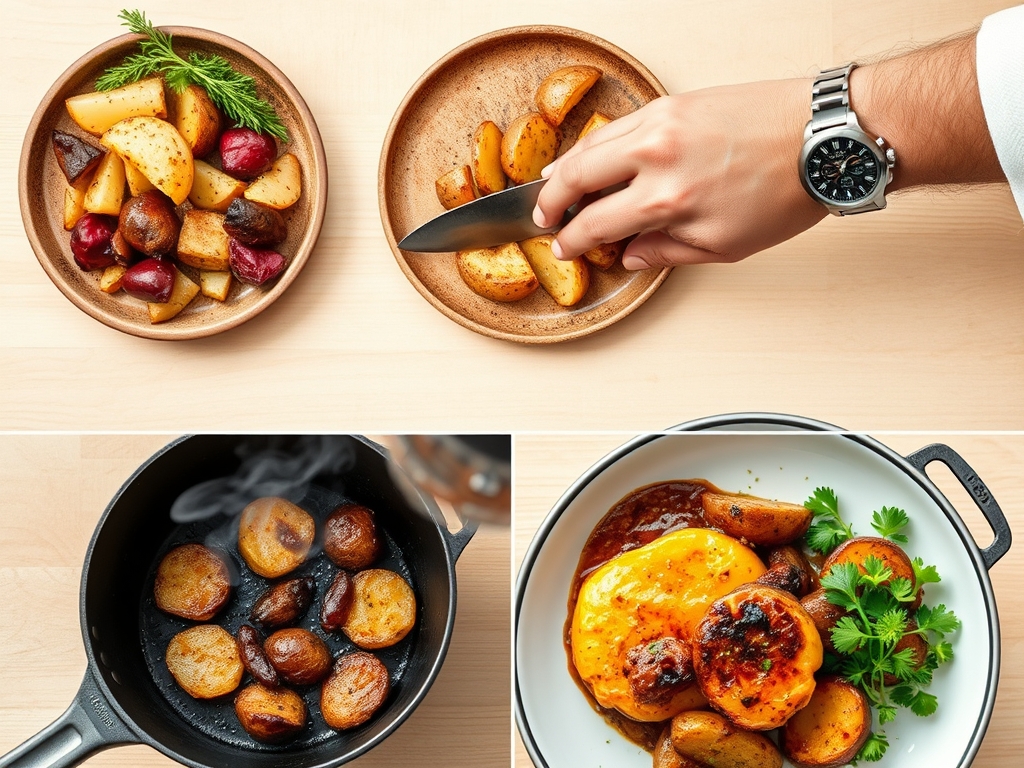
Place your potatoes in cold, heavily salted water. Bringing them to a boil from cold ensures the exterior does not turn to mush before the core is tender. Cook until a paring knife slides in with zero resistance.
Pro Tip: This stage is about starch gelatinization. By pre-cooking the potato, you are breaking down the crystalline structure of the starch, making it pliable and ready to be compressed without shattering.
2. The Steam Dry
Once drained, let the potatoes sit in the colander for three minutes. You want to see visible steam escaping. This is moisture leaving the building, which is essential for a crispy finish.
Pro Tip: This process is known as evaporative cooling. Removing surface moisture prevents the potatoes from steaming in the air fryer, which would result in a soggy, limp texture rather than a crisp one.
3. The Controlled Smash
Use a bench scraper or the bottom of a heavy glass to press each potato down. You are aiming for a thickness of about half an inch. If you go too thin, they will fall apart; too thick, and they won't get crunchy.
Pro Tip: Increasing the surface area maximizes the potential for the Maillard reaction. Every little crag and crevice created by the smash becomes a site for browning and flavor development.
4. The Oil Infusion
Whisk your oil, garlic paste, and herbs together. Use a pastry brush to coat every millimeter of the potato. Do not forget the undersides; the air fryer circulates heat, so the bottom needs protection and flavor too.
Pro Tip: Fat acts as a thermal conductor. It transfers heat from the air to the potato more efficiently than air alone, ensuring the exterior reaches the high temperatures needed for browning.
5. The Convection Blast
Arrange the potatoes in a single layer in the air fryer basket. Do not crowd them. Set the temperature to 400 degrees Fahrenheit. Airflow is your best friend here; the potatoes need space for the hot air to "scrub" the surface.
Pro Tip: This stage utilizes forced convection. The high-speed fan strips away the "cold air boundary layer" that surrounds food, cooking it significantly faster and more evenly than a standard oven.
6. The Mid-Way Flip
Halfway through the cooking time, use tongs to gently flip each potato. This ensures that the bottom, which is in contact with the basket, gets equal exposure to the direct heat source.
Pro Tip: Flipping prevents heat pooling. By exposing the underside to the direct path of the heating element, you ensure a uniform dehydration of the crust on both sides.
7. The Final Crisp
In the last two minutes, sprinkle on any delicate cheese like Parmesan or Pecorino. This allows the cheese to melt and form a lacy, crisp skirt around the edges without burning.
Pro Tip: This is the rendering phase. Any remaining fats are bubbling away, leaving behind a rigid, dehydrated starch structure that provides the signature "crunch" we crave.
The Deep Dive:
From a macro perspective, potatoes are a powerhouse of potassium and complex carbohydrates. One serving typically contains about 160 calories, depending on the amount of oil used. For those on specific diets, these are naturally gluten-free. For Keto enthusiasts, try swapping the potatoes for cauliflower florets, though the "smash" will be less structural.
The Fix-It:
- Potatoes are falling apart: You overcooked the parboil. Next time, pull them out 2 minutes earlier. Fix it now by gently pressing them together and using more oil to "glue" the pieces.
- Not crispy enough: You crowded the basket. The moisture from the potatoes is creating a humid environment. Cook in smaller batches.
- Burnt garlic: You used minced garlic from a jar or chopped it too large. Use a microplane next time to create a fine paste that melts into the oil.
Meal Prep: To reheat and maintain "day-one" quality, avoid the microwave at all costs. It vibrates water molecules, making the starch gummy. Instead, pop them back into the air fryer at 350 degrees for 4 minutes to re-crisp the exterior.
The Wrap-Up:
Mastering air fryer smashed potato recipes is about understanding the relationship between heat, moisture, and surface area. By following these steps, you are not just making a side dish; you are performing a series of precise chemical transformations that result in culinary gold. The air fryer is the perfect partner for this journey, providing the speed and intensity required for that world-class crunch. Now, go forth and smash; your kitchen is your laboratory, and the results are going to be delicious.
The Kitchen Table:
What is the best potato for smashing?
Yellow-fleshed Yukons are superior because their high starch and sugar content promotes better browning. They maintain a creamy interior while the skin becomes incredibly crisp, providing the perfect textural contrast for air frying.
Can I smash potatoes without boiling them?
Technically no. Raw potatoes are too rigid and will simply snap or shatter. Parboiling softens the internal starch granules, making the tuber pliable enough to flatten into a disc without losing its structural integrity.
Why are my smashed potatoes soggy?
Sogginess is usually caused by excess moisture or overcrowding the basket. Ensure you steam-dry the potatoes after boiling and leave ample space between each potato in the air fryer to allow for proper air circulation.
How do I make them extra crunchy?
Add a teaspoon of cornstarch or baking powder to your oil mixture. These powders increase the surface area on a microscopic level and help to wick away moisture, resulting in a shatteringly crisp exterior.