
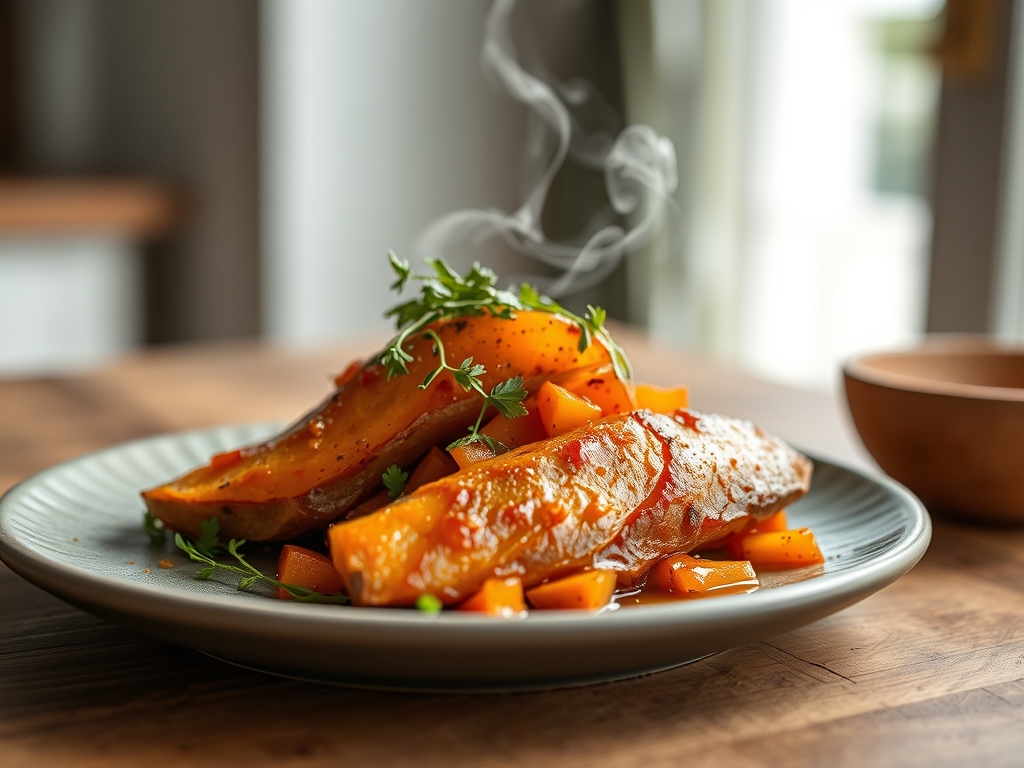
Picture this: a crisp autumn evening where the air smells of woodsmoke and the kitchen is filled with the scent of caramelizing sugars. You want comfort, but your digestive system is demanding a ceasefire. Finding the perfect balance between indulgence and gut health usually feels like a chore, but these six low fodmap sweet potato recipes are about to change your entire culinary perspective. We are moving beyond the basic steamed tuber and into the realm of high-end gastronomy that respects your boundaries.
The secret lies in the dose. Sweet potatoes contain mannitol, a polyol that can trigger sensitivity if you overindulge. However, the Monash University standard confirms that a 75-gram serving is perfectly safe for most people. We are going to maximize that 75 grams using molecular techniques to ensure every bite feels like a feast. We will use heat to catalyze the Maillard reaction, transforming simple starches into complex, nutty flavor profiles. By the time we are done, you will have a rotation of meals that feel like a warm hug for your stomach and a five-star experience for your palate. Let's get into the science of the simmer.
The Gathers:
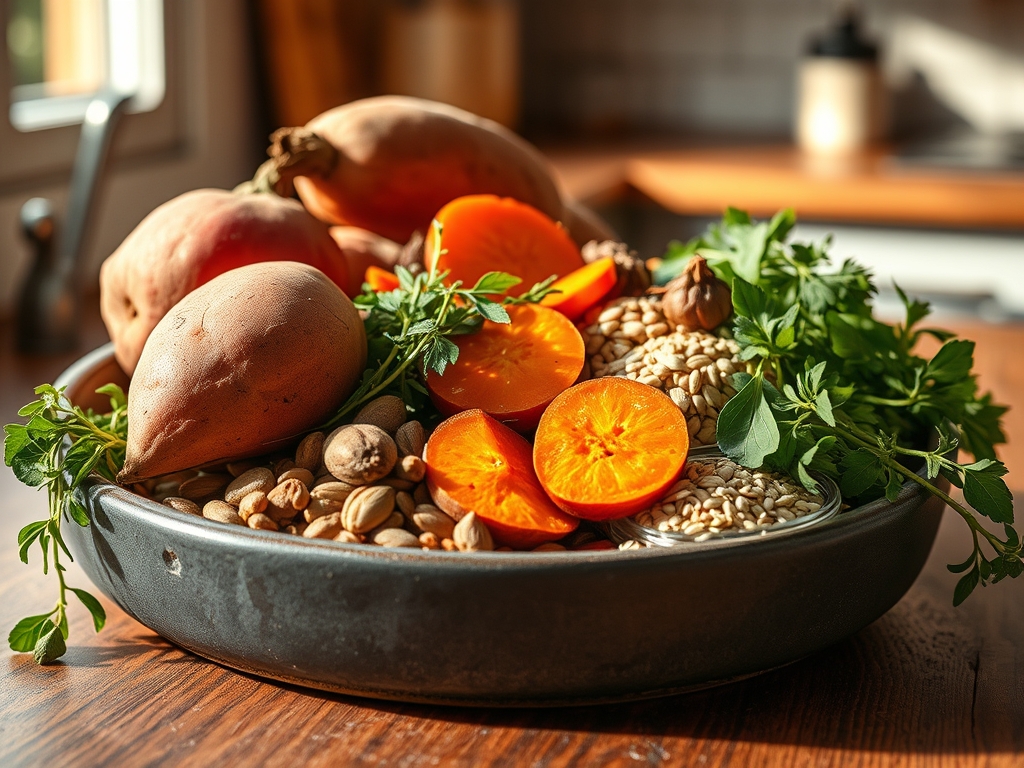
Before we ignite the burners, we must respect the mise-en-place. Our primary subject is the Beauregard or Jewel sweet potato; these varieties possess a high moisture content and a vibrant orange hue, indicating a wealth of beta-carotene. You will need a digital scale to ensure our 75-gram portions are precise. Grab your heavy-bottomed skillet for even heat distribution and a sharp chef's knife for uniform dicing.
The supporting cast is just as vital. We are substituting garlic and onions with leek tops (the green parts only) and chives to maintain that piquant profile without the fructans. For fats, we are looking at high-smoke-point oils like avocado oil or clarified butter (ghee), which provides a rich, viscous mouthfeel while being naturally low in lactose. To brighten the dishes, we use acidic components like lemon zest or rice wine vinegar to degrease the palate.
Smart Substitutions:
If you are avoiding nightshades, swap the paprika for toasted cumin seeds to maintain depth. If you need a vegan alternative to honey for glazing, use maple syrup; it is a low-FODMAP sweetener that provides a deep, woody sweetness that pairs beautifully with the earthy notes of the potato. Always keep a microplane nearby to zest citrus or grate fresh ginger, which adds a zingy, anti-inflammatory punch to every dish.
The Clock:
Efficiency in the kitchen is about the Chef's Flow. This isn't just about how fast you can chop; it is about managing the thermal momentum of your kitchen. Total prep time for these recipes averages 20 minutes, with active cooking time ranging from 15 to 40 minutes depending on the method.
We start with the "Cold Start" for roasting. By placing your sweet potatoes in a cold oven and then turning on the heat, you allow the internal temperature to rise slowly. This activates the amylase enzymes, which break down starches into maltose before the high heat sears the exterior. While the potatoes undergo this enzymatic transformation, you will use your bench scraper to clear your station and prep your proteins or dressings. This overlap ensures that by the time the timer dings, your entire meal is ready to be plated, maintaining the "day-one" freshness and heat.
The Masterclass:
1. Precision Dicing and Parboiling
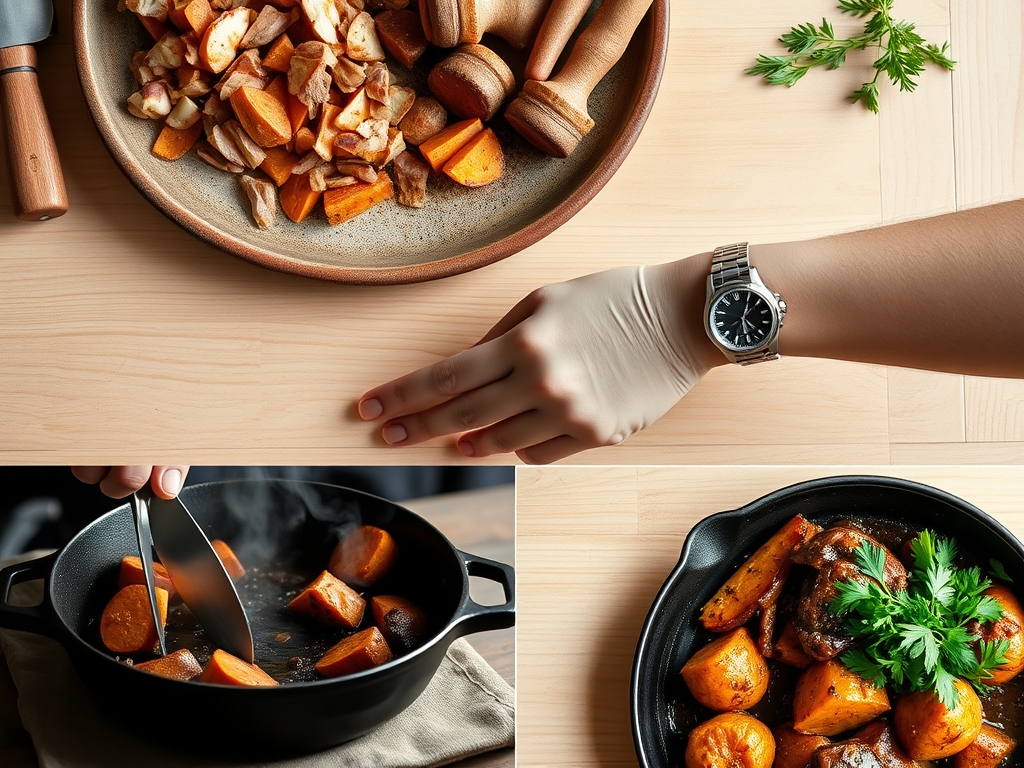
Start by peeling your tubers and dicing them into uniform 1/2-inch cubes. Consistency is key for even cooking. Place them in a saucier with cold salted water and bring to a simmer for just 5 minutes. This softens the pectin cell walls without turning the potato into mush.
Pro Tip: This is called parblanching. By starting in cold water, you ensure the exterior doesn't overcook before the center reaches the desired temperature, preventing a grainy texture.
2. The Sear and Maillard Magic
Drain the potatoes and pat them bone-dry with a lint-free towel. Heat your heavy-bottomed skillet with a tablespoon of ghee until it shimmers. Add the potatoes in a single layer. Do not crowd the pan, or they will steam instead of sear.
Pro Tip: The Maillard reaction occurs between 280 and 330 degrees Fahrenheit. If you see "fond" (brown bits) sticking to the pan, you are creating flavor molecules that didn't exist in the raw vegetable.
3. Infusing Aromatics
Lower the heat and add your leek tops, ginger, and a pinch of asafoetida (a brilliant low-FODMAP garlic substitute). Use tongs to toss the potatoes, ensuring they are coated in the infused fats.
Pro Tip: Fat is a flavor carrier. By infusing the oil with aromatics at a lower temperature, you prevent the delicate volatile oils in the herbs from burning and becoming bitter.
4. Deglazing for Depth
Pour in two tablespoons of chicken bone broth or water. Use a wooden spoon to scrape up all those browned bits from the bottom of the pan. This process, known as deglazing, incorporates the concentrated flavors back into a light sauce that coats the potatoes.
Pro Tip: This liquid creates a brief burst of steam that finishes the interior of the potato, ensuring a creamy center that contrasts with the seared crust.
5. Aerating the Final Sauce
If you are making a mash or a thickened sauce, use a whisk to vigorously incorporate a cold knob of butter or a splash of coconut milk at the very end.
Pro Tip: This is called mounting with butter (monter au beurre). The cold fat creates an emulsion with the warm liquid, resulting in a glossy, velvet-like finish that feels luxurious on the tongue.
6. Resting and Carryover Cooking
Remove the dish from the heat when it is just shy of your desired tenderness. Transfer it to a warm bowl and cover it loosely with foil for three minutes.
Pro Tip: Thermal carryover means the internal temperature will continue to rise by 5 to 10 degrees after removal from the heat. Resting allows the moisture to redistribute, preventing a dry bite.
The Deep Dive:
When we look at the macro nutrition, sweet potatoes are a powerhouse of complex carbohydrates and fiber. A 75-gram serving provides roughly 15 grams of carbs and 2 grams of fiber, making it a low-glycemic option that prevents insulin spikes.
Dietary Swaps:
For a Keto twist, keep the portion small and pair with high-fat proteins like salmon or ribeye. For Vegan diners, replace ghee with refined coconut oil to maintain that high-heat stability. If you are Gluten-Free, you are already safe, as sweet potatoes are naturally grain-free.
The Fix-It:
- Mushy Potatoes: This happens when you crowd the pan. The moisture released has nowhere to go, so it steams the potatoes. Fix: Cook in batches to maintain high surface tension.
- Bitter Aftertaste: This usually means your spices or leek tops burned. Fix: Add a tiny pinch of sugar or maple syrup to balance the bitterness with sweetness.
- Uneven Cooking: This stems from poor knife skills. Fix: Use a mandoline for slices or a ruler to practice your dice until it is second nature.
Meal Prep:
To maintain "day-one" quality, reheat your sweet potatoes in an air fryer or a dry skillet. Avoid the microwave, as it vibrates water molecules too violently, leading to a collapsed, rubbery starch structure.
The Wrap-Up:
Mastering low fodmap sweet potato recipes is about more than just following a list; it is about understanding the chemistry of your kitchen. By controlling your portions and utilizing professional techniques like deglazing and parblanching, you transform a humble root vegetable into a culinary masterpiece. You don't have to sacrifice flavor for comfort. Grab your saucier, weigh out your portions, and let the science of good food heal your gut and delight your senses. You've got the tools; now go create something delicious!
The Kitchen Table:
Can I eat sweet potato every day on a low-FODMAP diet?
Yes, provided you stick to the 75-gram serving size. This portion is considered "green light" by Monash University. Always monitor your individual tolerance, as everyone's gut microbiome reacts differently to mannitol.
Why do my sweet potatoes turn brown so fast?
This is enzymatic browning. When the flesh is exposed to oxygen, enzymes react to create melanin. To prevent this, keep your peeled or cut potatoes in a bowl of cold water until you are ready to cook.
What is the best way to store leftovers?
Store them in an airtight glass container for up to four days. To preserve texture, avoid freezing roasted sweet potatoes, as the ice crystals will rupture the starch cells, making them watery upon thawing.
Is the skin of the sweet potato low-FODMAP?
The skin is safe and contains significant fiber. However, ensure you scrub it thoroughly with a vegetable brush to remove debris. The skin also provides a textural contrast that enhances the overall eating experience.