
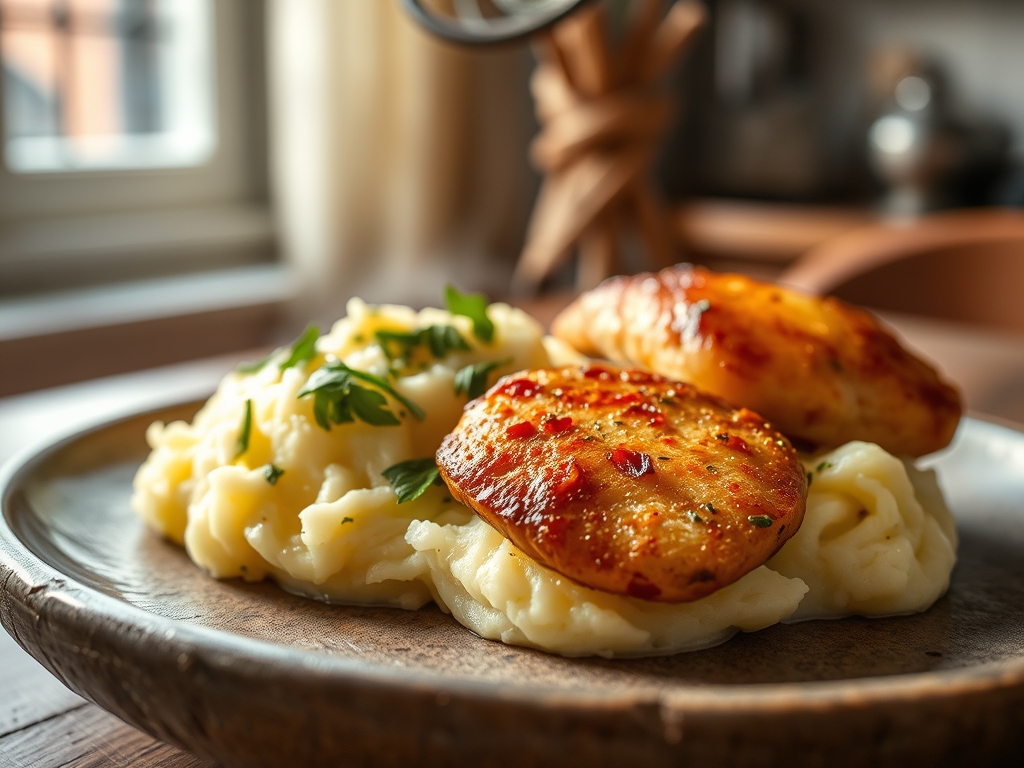
Steam rises in a fragrant, opaque plume as a golden-brown chicken breast meets a velvet landscape of butter-whipped spuds. This is the ultimate comfort architecture. Finding the perfect mashed potato and chicken recipes is not just about filling a plate; it is about balancing the structural integrity of a starch with the savory, succulent profile of poultry.
When we talk about mashed potato and chicken recipes, we are entering the realm of molecular synergy. The mild, earthy profile of the potato acts as a blank canvas for the Maillard reaction products found on a well-seared bird. Whether you are craving the piquant bite of a lemon-herb pan sauce or the deep, umami richness of a red wine reduction, these pairings rely on the contrast between the fibrous texture of the meat and the aerated, buttery fluff of the mash. We are moving beyond the basic cafeteria scoop. We are building a meal that uses fat as a flavor carrier and acid as a bright, structural counterbalance. Grab your apron; we are about to turn a humble Tuesday night into a masterclass in texture and temperature.
The Gathers:
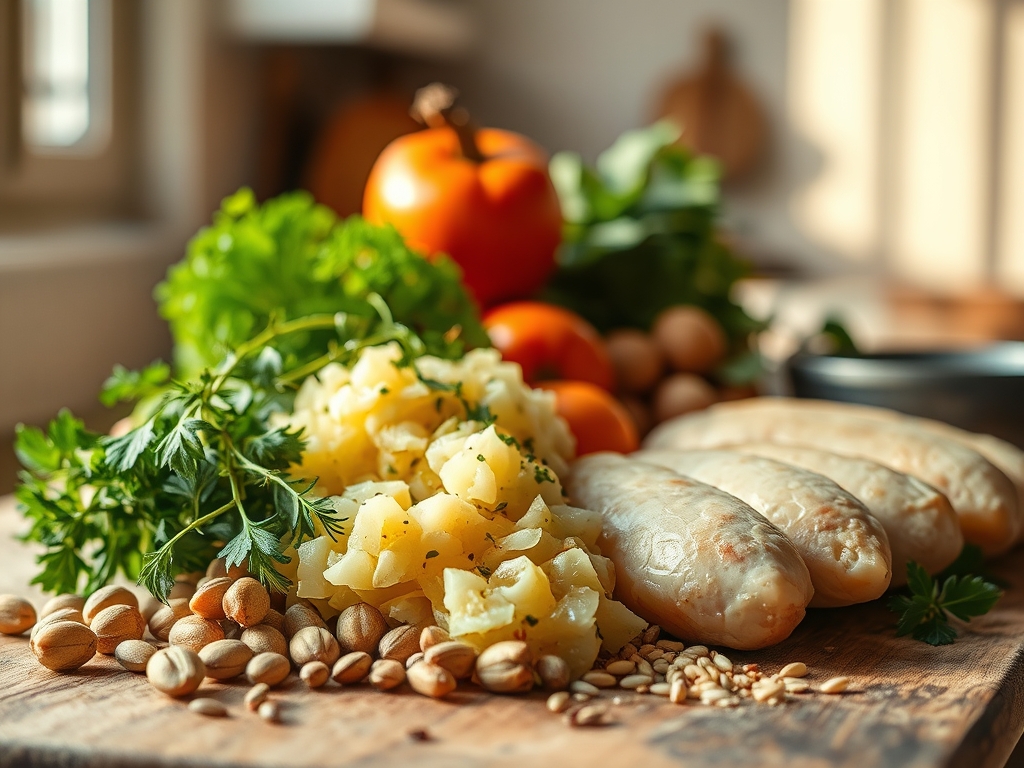
To execute these mashed potato and chicken recipes with precision, your mise-en-place must be impeccable. Start with the starch. You want Yukon Gold potatoes for their naturally waxy-yet-creamy cell structure, or Russets if you prefer a high-starch, fluffy finish. For the poultry, organic air-dried chicken provides a superior skin-to-fat ratio, ensuring that when you render the skin, it becomes a crisp, salty wafer rather than a rubbery afterthought.
You will need high-fat European butter (aim for 82 percent butterfat) to achieve a truly viscous mouthfeel in your puree. Heavy cream should be at room temperature to prevent the starch molecules from seizing when mixed. For the aromatics, gather fresh thyme, rosemary, and several heads of garlic. The garlic should be roasted until it reaches a paste-like consistency, allowing it to infuse the fat phase of your mash.
Smart Substitutions: If you are looking to lighten the caloric density, swap half of the potatoes for steamed, pureed cauliflower. The flavor remains neutral, but the glycemic load drops significantly. For the chicken, if you cannot find bone-in breasts, use skin-on thighs. The higher myoglobin content in dark meat provides a more robust flavor that stands up well to heavy, garlic-laden potatoes. Use a microplane to zest lemon over the finished dish to provide an essential hit of acidity that cuts through the richness.
The Clock
Efficiency in the kitchen is all about "Chef's Flow." Total active prep time for these pairings usually clocks in at 25 minutes, with a total cook time of 45 minutes. The secret is overlapping your tasks. While the potatoes undergo gelatinization in boiling salted water, you should be searing your chicken in a heavy-bottomed skillet.
By the time the chicken enters the oven for its final roast, you are ready to pass the potatoes through a ricer. This synchronization ensures that both components reach the plate at their peak thermal state. Never let your potatoes sit in cold water after cooking; the steam must be allowed to escape immediately to prevent a gummy, glue-like texture caused by overworked starch granules.
The Masterclass
1. The Prep and Thermal Shock
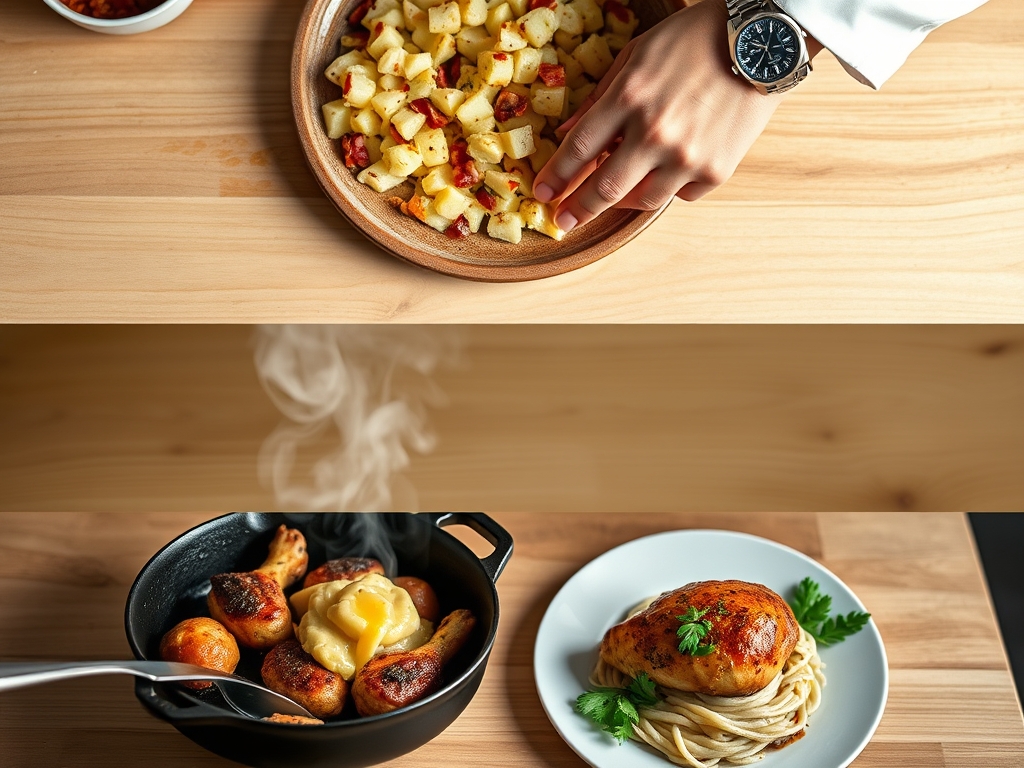
Start by cubing your potatoes into uniform two-inch pieces to ensure even heat distribution. Place them in cold, heavily salted water. Starting with cold water allows the exterior and interior of the potato to heat at the same rate.
Pro Tip: This prevents the outside from disintegrating before the center is soft. Salt the water until it tastes like the sea; this is your only chance to season the potato from the inside out via osmosis.
2. Searing for the Maillard Reaction
Pat your chicken skin bone-dry with paper towels. Use a digital scale to ensure even portions. Place the chicken skin-side down in a cold heavy-bottomed skillet and then turn the heat to medium.
Pro Tip: Starting in a cold pan allows the subcutaneous fat to render slowly, resulting in a glass-like crunch. This is the Maillard reaction in action, creating hundreds of different flavor compounds as proteins and sugars transform under heat.
3. The Aeration Phase
Once the potatoes are fork-tender, drain them and return them to the hot pot for sixty seconds to evaporate excess moisture. Pass them through a ricer or food mill into a warm bowl.
Pro Tip: Avoid a food processor at all costs. The high-speed blades shear the starch cells, releasing amylose and turning your mash into an elastic, gluey mess. Manual aeration keeps the texture light and cloud-like.
4. Emulsifying the Fats
Slowly incorporate your warm cream and cold butter cubes. Use a saucier to warm your liquids with aromatics like thyme or bay leaves before adding them to the mash.
Pro Tip: Cold butter added to warm potatoes creates a superior emulsification. The milk solids stay suspended in the fat, leading to a glossy finish rather than a greasy one.
5. Deglazing the Pan
While the chicken rests, use white wine or chicken stock to deglaze the skillet used for the poultry. Use a bench scraper or whisk to lift the "fond" (the brown bits) from the bottom of the pan.
Pro Tip: These brown bits are concentrated umami. Reducing this liquid by half creates a natural jus that bridges the gap between the savory chicken and the creamy potatoes.
6. The Final Rest and Plating
Allow the chicken to rest for at least seven minutes before slicing. This allows the muscle fibers to relax and reabsorb the internal juices.
Pro Tip: This utilizes thermal carryover. The internal temperature will continue to rise by about five degrees after removal from heat. Slicing too early causes the juices to run out, leaving the meat dry and the potatoes soggy.
The Deep Dive
Macro Nutrition: A standard serving of these mashed potato and chicken recipes provides approximately 35 grams of protein, 40 grams of carbohydrates, and 18 grams of healthy fats. By focusing on high-quality fats like grass-fed butter, you increase the fat-soluble vitamin content (A, D, and K2).
Dietary Swaps: For a Vegan version, utilize a high-quality cashew cream and vegan butter substitute. The high fat content in cashews mimics the mouthfeel of dairy. For Keto enthusiasts, replace the potatoes entirely with a celery root and cauliflower mash. For Gluten-Free diners, ensure your chicken seasoning and any thickening agents for gravy use cornstarch or arrowroot powder instead of flour.
The Fix-It:
- Gummy Potatoes: If you overmix, you cannot "un-gum" them. However, you can spread them in a baking dish, top with cheese, and bake to turn them into a gratin.
- Dry Chicken: If the poultry is overcooked, shred it and toss it in a high-fat sauce or more of that pan deglaze to reintroduce moisture.
- Broken Sauce: If your pan sauce separates, whisk in a tablespoon of cold water or heavy cream over low heat to re-emulsify the fats.
Meal Prep: To maintain "day-one" quality, store the mash and chicken in separate airtight containers. When reheating the potatoes, add a splash of milk and cover tightly. This creates a steam chamber that prevents the starch from dehydrating and becoming grainy.
The Wrap-Up
Mastering mashed potato and chicken recipes is a rite of passage for any home cook. It is the perfect marriage of technical precision and soulful comfort. By focusing on the science of starch and the chemistry of a perfect sear, you elevate a simple meal into a culinary event. Remember, the secret is in the details; the temperature of your butter, the dryness of your chicken skin, and the patience of your rest time. Now, go forth and conquer your kitchen with the confidence of a pro.
The Kitchen Table
What is the best potato for mashing with chicken?
Yukon Gold potatoes are the gold standard. Their medium-starch content provides a naturally buttery flavor and a creamy, non-grainy texture that holds up beautifully against savory chicken juices and heavy pan gravies.
How do I keep chicken skin crispy when served with mash?
Ensure the chicken skin is bone-dry before searing. Once cooked, never pour gravy directly over the skin; instead, pool the sauce around the base of the chicken to preserve that essential, glass-like crunch.
Can I make mashed potatoes ahead of time?
Yes, you can prepare them up to two days in advance. Reheat them slowly in a heavy-bottomed pot over low heat, adding a touch of extra warm cream or butter to restore the original creamy emulsification.
Why are my mashed potatoes gluey?
Gluey potatoes are caused by overworking the starch. This happens when using a blender or food processor. Use a ricer or a hand masher to keep the starch cells intact for a light, fluffy result.