
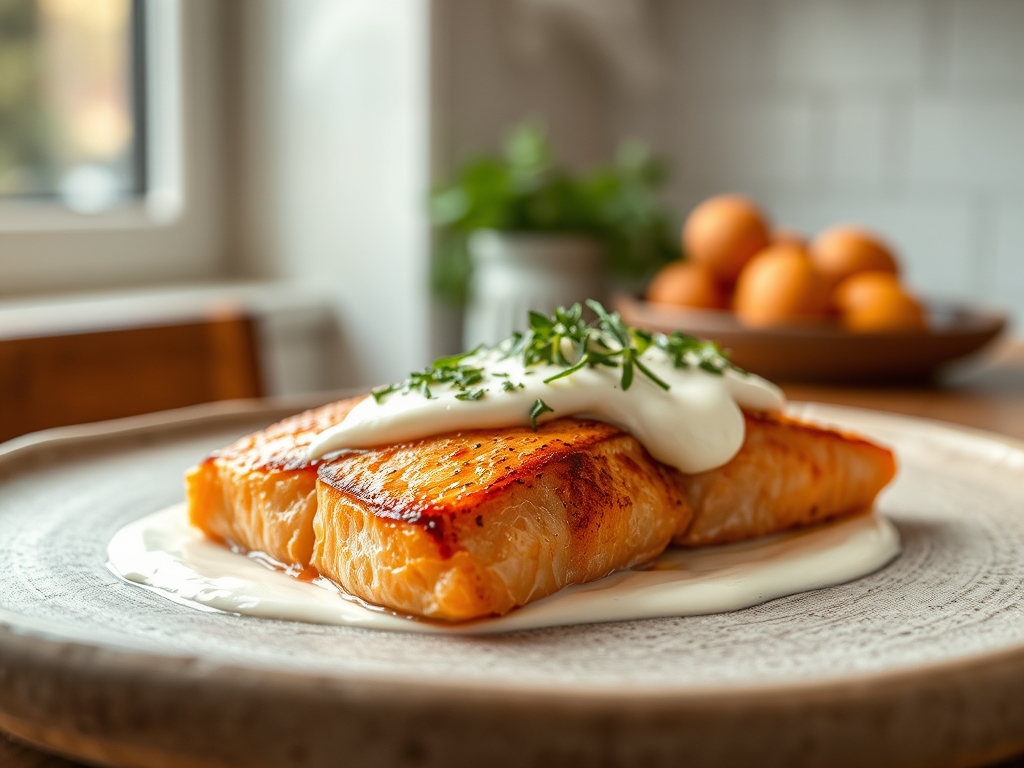
Imagine a heavy-bottomed skillet screaming as a cold fillet hits the hot oil; the sound is a rhythmic hiss that promises a shattering, golden crust. We are moving beyond the basic lemon wedge to explore the sophisticated chemistry of salmon recipes with greek yogurt. It is the ultimate culinary power couple because the lactic acid in the yogurt acts as a gentle denaturant; it tenderizes the fish proteins while providing a thick, viscous base for bold aromatics. Whether you are searing a sockeye or roasting a fatty king salmon, the contrast between the rich, omega-3 fats and the piquant brightness of a yogurt sauce creates a balanced profile that feels like a five-star bistro meal. We are diving into a world where high-protein dairy meets the ocean's finest harvest; resulting in a texture that is flaky, moist, and deeply satisfying. Get your microplane ready because we are about to elevate your weeknight dinner into a technical masterpiece that tastes like pure comfort.
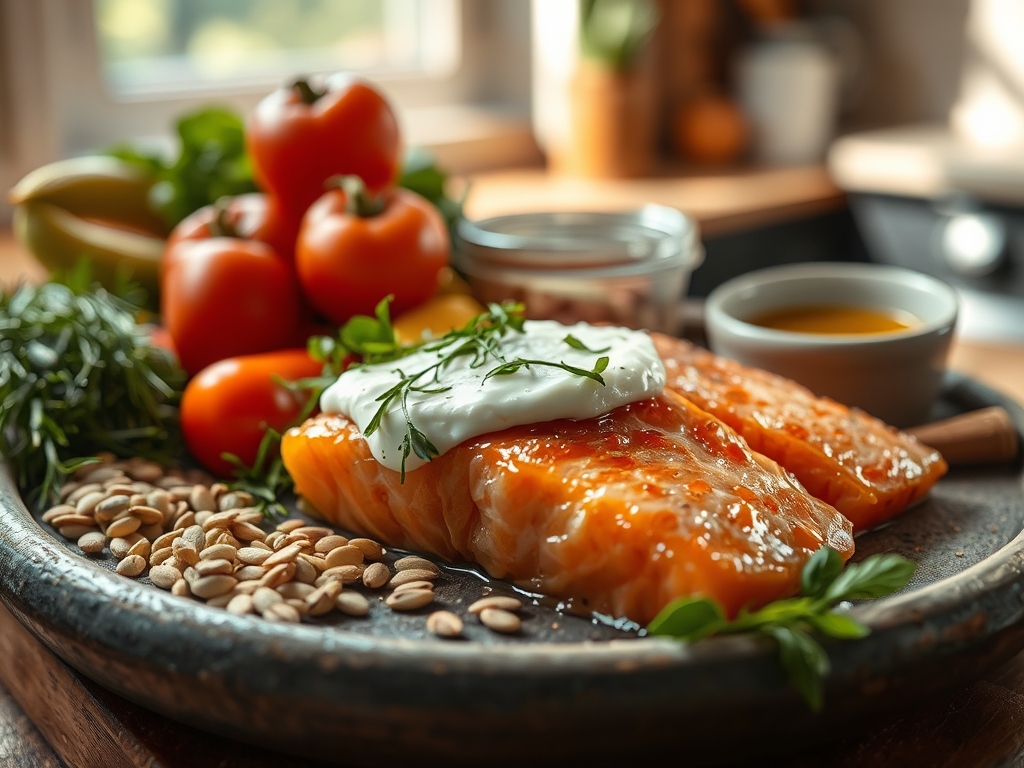
The Gathers:
To execute these salmon recipes with greek yogurt, your mise-en-place must be precise. Start with center-cut fillets; look for vibrant color and a firm texture that springs back when touched. For the dairy component, choose a full-fat, plain Greek yogurt. The higher fat content prevents the sauce from breaking when it hits the residual heat of the fish. You will need a bouquet of fresh herbs: dill for its feathery anise notes, chives for a mild onion bite, and parsley to provide a grassy finish.
Grab your digital scale to measure out 200 grams of yogurt per four fillets. You will also need aromatics like garlic, shallots, and lemons. Use a microplane to zest the citrus; this allows you to capture the volatile oils in the flavedo without the bitter white pith. For the "Smart Substitutions," if you are out of Greek yogurt, a thick Icelandic skyr or a strained labneh works beautifully. If you need a dairy-free alternative, a cashew-based unsweetened yogurt provides the necessary creaminess and protein structure to mimic the mouthfeel of traditional dairy.
The Clock: Chef's Flow
Efficiency in the kitchen is about managing the "Chef's Flow." This refers to the synchronization of prep work and thermal application. Total active time for these recipes is approximately 15 minutes, with a cook time of 10 to 12 minutes depending on the thickness of the fillet.
Start by tempering your salmon; let it sit at room temperature for 20 minutes. Cold fish in a hot pan causes the muscle fibers to contract violently, leading to a tough texture. While the fish tempers, use your bench scraper to organize your chopped herbs and aromatics. Preheat your oven or skillet. By the time your pan is at the smoke point, your yogurt sauce should be fully infused and resting in a saucier. This overlap ensures that the fish is served immediately after resting, preserving the delicate moisture levels within the flakes.
The Masterclass:
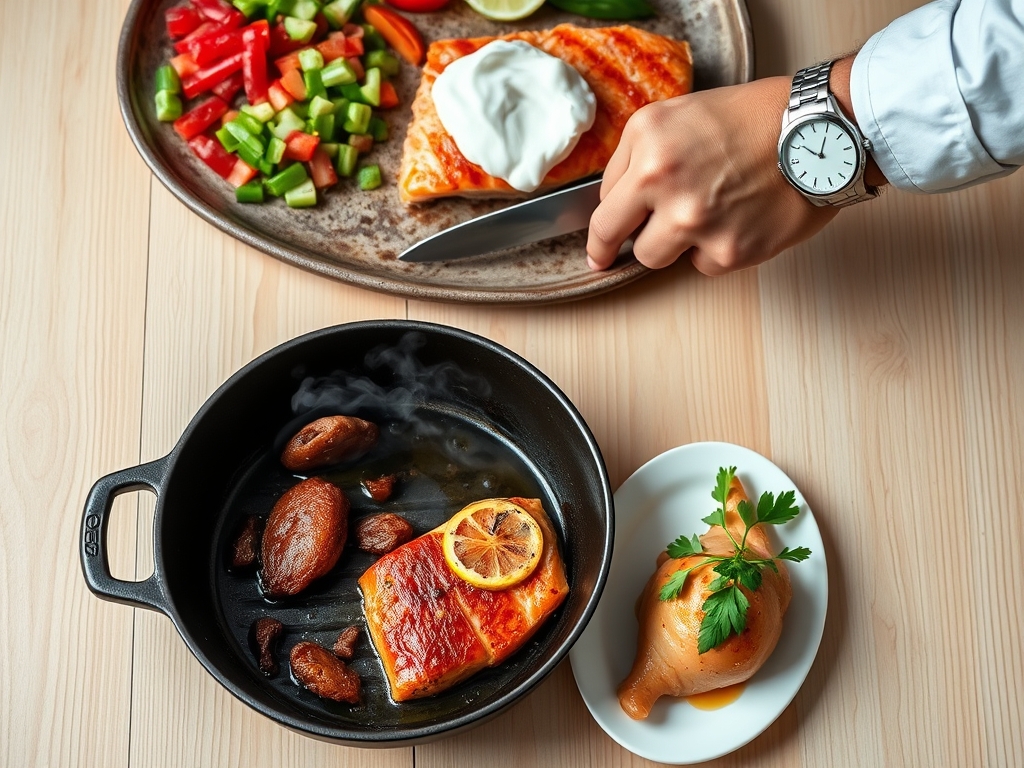
1. The Sear and the Maillard Reaction
Pat the salmon skin bone-dry with paper towels. Heat a heavy-bottomed skillet with a high-smoke-point oil until it shimmers. Place the salmon skin-side down and press firmly with a flexible spatula for 30 seconds.
Pro Tip: This initial pressure prevents the skin from curling. The Maillard reaction occurs between 285 and 330 degrees Fahrenheit; creating that savory, browned crust that provides a structural contrast to the creamy yogurt topping.
2. Emulsifying the Yogurt Base
In a small bowl, whisk your Greek yogurt with a splash of extra virgin olive oil and lemon juice. Add your microplaned garlic and herbs.
Pro Tip: Whisking the oil into the yogurt creates a temporary emulsion. The fats in the oil wrap around the water molecules in the yogurt; resulting in a more stable sauce that resists thinning when it encounters the warm fish.
3. Thermal Carryover and Resting
Remove the salmon from the heat when the internal temperature reaches 125 degrees Fahrenheit for medium-rare. Transfer it to a warm plate and let it rest for three to five minutes.
Pro Tip: This utilizes thermal carryover. The internal temperature will continue to rise by about 5 degrees while resting. This allows the protein fibers to relax and reabsorb juices; ensuring the salmon does not "bleed" moisture when you flake it.
4. The Infusion Layering
Spread a generous layer of the yogurt mixture over the warm salmon. The residual heat will slightly melt the yogurt; allowing the herbal oils to infuse into the top layer of the fish.
Pro Tip: This is an enzymatic process. The heat activates the aromatic compounds in the fresh herbs; making the flavors more pronounced than if you served the sauce completely cold on a cold fillet.
The Deep Dive:
From a macro nutrition perspective, salmon recipes with greek yogurt are a powerhouse. A standard serving provides roughly 40 grams of high-quality protein and a significant dose of Vitamin B12 and Selenium. The probiotics in the yogurt are sensitive to high heat; so adding the sauce as a finishing element preserves some of the beneficial bacteria cultures.
For dietary swaps, Keto followers should stick to full-fat yogurt to maintain satiety. For a Vegan version, use a "salmon" made from marinated carrots or tofu and pair it with a coconut-milk yogurt spiked with nutritional yeast for umami. If you are Gluten-Free, ensure your spices are certified, though the core ingredients are naturally safe.
The Fix-It:
- Curdling Sauce: If your yogurt sauce looks grainy, it likely overheated. Fix it by whisking in a teaspoon of room-temperature heavy cream or water to re-emulsify.
- Soggy Skin: This happens due to moisture. Use a sharp knife to scrape the skin before cooking to remove excess water; then salt only right before the fish hits the pan.
- Overcooked Fish: If the salmon is dry, flake it into the yogurt sauce and use it as a spread or "salmon salad" to mask the texture loss.
Meal Prep Science: To reheat, avoid the microwave. The high-frequency waves vibrate water molecules too fast; toughening the fish. Instead, place the salmon in a 275-degree oven with a splash of water and cover with foil. This creates a gentle steam environment that restores "day-one" flakiness.
The Wrap-Up:
Mastering salmon recipes with greek yogurt is about understanding the intersection of temperature and texture. You are not just cooking dinner; you are conducting a symphony of fatty acids and lactic acids. The brilliance of this pairing lies in its versatility. You can take it toward the Mediterranean with cucumbers and feta or toward the Middle East with sumac and za'atar. Now that you have the technical foundation and the "Chef's Flow" down; go forth and sear with confidence. Your kitchen is now a lab of deliciousness; and you are the head scientist.
The Kitchen Table:
How do I stop Greek yogurt from curdling on hot salmon?
Always use full-fat yogurt and apply it as a finishing sauce rather than cooking it. The higher fat content provides a buffer against heat; while adding it at the end prevents the proteins from tightening and separating into curds.
Can I use frozen salmon for these recipes?
Yes, but you must thaw it completely in the refrigerator. Pat it extremely dry with paper towels to remove "purge" moisture. This ensures you still achieve a proper Maillard reaction and a crispy exterior despite the previous freezing.
What is the best way to store leftover yogurt sauce?
Store the sauce in an airtight glass container for up to three days. The flavors actually deepen over time as the aromatics infuse into the yogurt fats. Stir it vigorously before serving to restore the smooth, aerated texture.
Why is my salmon skin sticking to the pan?
The pan likely was not hot enough, or you moved the fish too soon. Protein bonds with metal at low temperatures. Wait for the fish to "self-release" once the crust has formed before attempting to flip it with your spatula.