
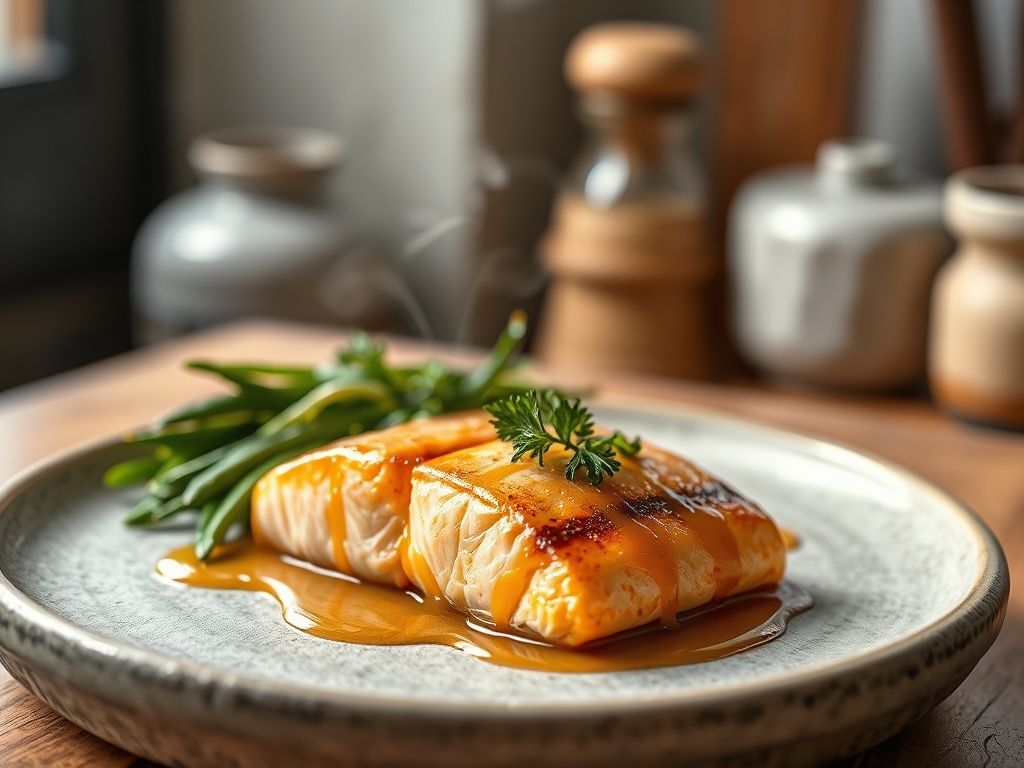
Picture the kitchen at sunset; the amber glow of the golden hour perfectly matches the viscous, bubbling glaze atop a fresh fillet. You are craving that specific balance of sharp tang and earthy sweetness that only maple mustard salmon recipes can provide. It is more than just dinner; it is a chemical celebration where the piquant bite of vinegar meets the complex sugars of the forest. We are going to transform a simple protein into a masterpiece of texture and flavor.
The magic happens when the sugars in the maple syrup undergo the Maillard reaction, bonding with the proteins in the fish to create a savory, caramelized crust. Meanwhile, the mustard acts as a natural emulsifier, holding the fats and acids together so the sauce clings to every flake rather than sliding off into the pan. This is not just a meal; it is a lesson in culinary physics. We will explore ten distinct variations of this glaze, ensuring your repertoire is as versatile as it is delicious. Grab your apron and your favorite heavy-bottomed skillet; we are about to elevate your weeknight routine into a gourmet experience.
The Gathers:
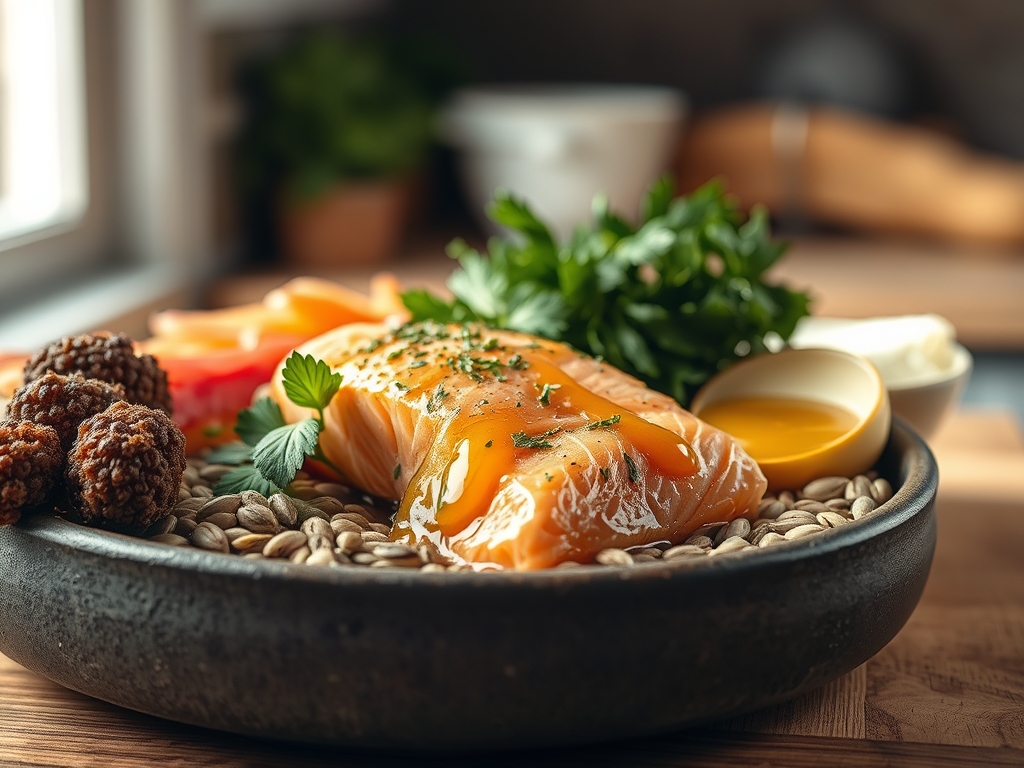
Before we ignite the burners, we must organize our mise-en-place. Use a digital scale to ensure precision, as the ratio of acid to sugar determines the glaze's stability. You will need high-quality Dijon mustard for its sulfurous punch and Grade A dark maple syrup for its robust mineral content. Gather fresh sprigs of rosemary or thyme to infuse the lipids, and keep a microplane handy for zesting aromatics.
Smart Substitutions: If you lack maple syrup, honey is a viable alternative, though it has a higher fructose content and burns faster. For a keto-friendly version, use an allulose-based syrup. If Dijon is too sharp, a whole-grain mustard adds a delightful pop of texture through its intact mustard seeds. For those avoiding soy, coconut aminos provide that essential umami backbone without the gluten found in traditional soy sauce.
The Clock
Efficiency in the kitchen is about "Chef's Flow," the art of overlapping tasks to minimize downtime. Expect a total time of 25 minutes. Prep takes exactly 10 minutes; this includes whisking your glaze in a small saucier and patting the salmon dry to ensure maximum skin crisping.
The cooking phase requires 12 to 15 minutes depending on the thickness of the fillet. We allow for a 3-minute resting period, which is non-negotiable. During this time, carryover cooking finishes the center of the fish while the juices redistribute, preventing a dry, fibrous texture. By the time you have set the table and poured a crisp glass of Sauvignon Blanc, the salmon will be at its thermal peak.
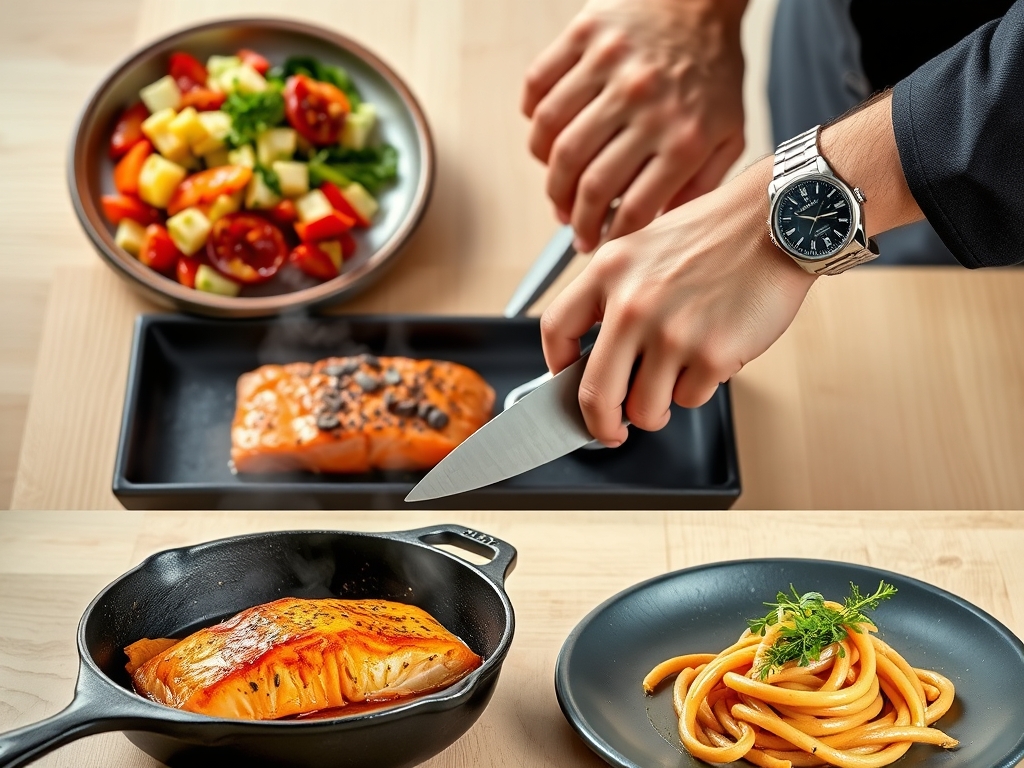
The Masterclass
1. The Surface Prep
Use a bench scraper or paper towels to remove every trace of moisture from the skin. Moisture is the enemy of the sear; it creates steam which prevents the Maillard reaction.
Pro Tip: This is known as surface dehydration. By removing water, you allow the heat to immediately begin breaking down amino acids and reducing sugars, resulting in a golden-brown crust rather than a grey, boiled exterior.
2. The Emulsion Whisk
In a small bowl, combine your mustard, maple, and a splash of apple cider vinegar. Use a small whisk to aerate the mixture until it becomes a singular, viscous liquid.
Pro Tip: Mustard contains mucilage, a natural stabilizer. When you whisk, you are creating a stable emulsion that prevents the oil in the fish from separating from the water-based maple syrup during the heating process.
3. The Searing Phase
Heat your heavy-bottomed skillet over medium-high heat until the oil shimmers. Place the salmon skin-side down and press firmly with a flexible fish spatula.
Pro Tip: This physical pressure prevents the protein fibers from curling as they contract. It ensures even heat distribution across the entire surface area of the skin for a uniform crunch.
4. The Glaze Application
Once the fish is flipped, brush the glaze generously over the top. The heat of the pan will cause the glaze to reduce and thicken almost instantly.
Pro Tip: This is the "nappe" stage. The reduction of water content through evaporation increases the viscosity of the sauce, allowing it to coat the back of a spoon (or the top of your fish) perfectly.
5. The Thermal Finish
Transfer the pan to a preheated oven or cover it to finish the interior. Use a digital thermometer to pull the fish at 125 degrees Fahrenheit for a medium-rare finish.
Pro Tip: Thermal carryover will raise the internal temperature by another 5 degrees while the fish rests. Pulling it early prevents the albumin (the white protein) from squeezing out and making the fish look unappealing.
The Deep Dive
From a nutritional standpoint, maple mustard salmon recipes are a powerhouse. A standard 6-ounce portion provides roughly 34 grams of high-quality protein and is rich in Omega-3 fatty acids, which support brain health. The maple syrup, while a sugar, contains manganese and zinc, making it a more nutrient-dense sweetener than refined white sugar.
Dietary Swaps: To make this vegan, apply the glaze to thick "steaks" of cauliflower or firm tofu. For a strict Keto profile, replace the maple syrup with a monk fruit maple substitute and increase the mustard ratio. For Gluten-Free diners, always verify that your mustard brand does not use flour as a thickener.
The Fix-It:
- The Glaze is Burning: Your pan is too hot. Deglaze immediately with a tablespoon of water or white wine to lower the temperature and loosen the sugars.
- Skin is Soggy: You likely flipped too early. The skin will naturally "release" from the pan once the proteins have fully denatured and crisped.
- Fish is Dry: You skipped the resting phase. Resting allows the muscle fibers to relax and reabsorb the moisture that was pushed to the center during cooking.
Meal Prep Science: If reheating, do so at a low temperature (275 degrees Fahrenheit) with a splash of water covered in foil. This creates a mini-steam chamber, preventing the fats from oxidizing and turning the fish "fishy" or tough.
The Wrap-Up
You have officially mastered the art of the glaze. By understanding the interplay between the emulsifying power of mustard and the caramelization of maple, you have moved beyond following a recipe to understanding the "why" behind the flavor. Whether you choose the spicy chipotle-maple variant or the classic herbaceous Dijon version, your kitchen is now a laboratory of high-end bistro quality. Go forth, sear with confidence, and enjoy the literal fruits of your labor.
The Kitchen Table
Can I use maple extract instead of syrup?
No; maple extract lacks the sugar solids necessary for caramelization. It provides flavor but won't create a thick, viscous glaze. Stick to real maple syrup for the proper chemical reaction and texture during the reduction phase.
Why does my salmon have white stuff on it?
That white substance is albumin, a protein that extrudes when salmon is cooked too quickly or overcooked. To minimize this, cook the fish at a lower temperature and pull it from the heat just before it reaches full doneness.
How do I get the skin extra crispy?
Ensure the skin is bone-dry before hitting the pan. Use a high-smoke-point oil and do not move the fish for at least three minutes. The skin needs uninterrupted contact with the heat to undergo full dehydration and crisping.
What is the best mustard for this recipe?
Dijon mustard is the gold standard because its acidity balances the maple sweetness. However, a whole-grain mustard adds excellent textural contrast. Avoid "yellow" stadium mustard, as its high vinegar and turmeric content can overpower the delicate fish.